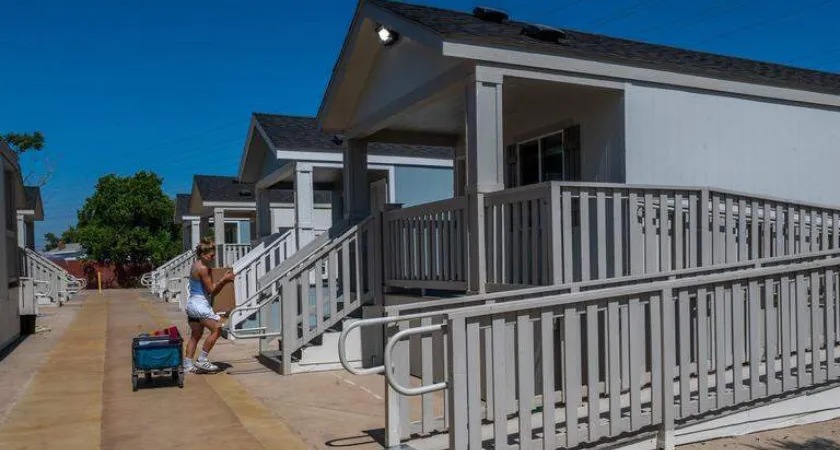
California lawmakers are advancing a new legislative package aimed at accelerating the use of factory-built housing as part of a broader effort to tackle the state’s affordability crisis.
.webp)
The proposals focus on modular construction — homes built in factories and assembled on-site — by addressing regulatory, financing, and logistical challenges that have limited adoption across the state.
“California is a leader in innovation — it’s time we apply that mindset to solving our housing crisis,” said Buffy Wicks in a statement.
The package of bills is designed to remove key obstacles that have slowed the expansion of modular housing. Rather than introducing sweeping reforms, lawmakers are targeting practical issues such as inconsistent building standards, inspection delays, and financing hurdles.
The effort follows extensive research and outreach conducted by a state Assembly select committee chaired by Wicks. Legislators studied modular housing models in places like Sweden and several U.S. states, while also consulting with labor unions, investors, and manufacturers.
A report from the Terner Center for Housing Innovation reinforced the need for policy changes to scale factory-built housing.
“Our research finds that scaling factory-built housing in California depends less on technological advancement and more on addressing barriers across policy, financing, and project delivery,” said Ben Metcalf. “This legislative package reflects those insights.”
One of the most significant barriers identified is the cost and complexity of transporting modular housing components.
A bill introduced by Josh Hoover aims to streamline transportation by limiting the technical requirements imposed by state and local agencies. It would also allow certain permitted manufacturers to transport modular units without requiring escort vehicles on highways.
Hoover described the proposal as a “commonsense bill.”
These changes are intended to reduce costs and delays, making modular housing a more viable option for developers across California.
Despite growing interest, modular housing remains a relatively small segment of California’s construction market. Only a few thousand units are currently produced each year across the western United States.
Questions remain about how quickly the industry can scale to meet demand, particularly as it relates to workforce capacity and supply chains. Labor unions have shown cautious support for modular construction, seeing potential benefits for workers, though tensions persist around broader housing policy debates.
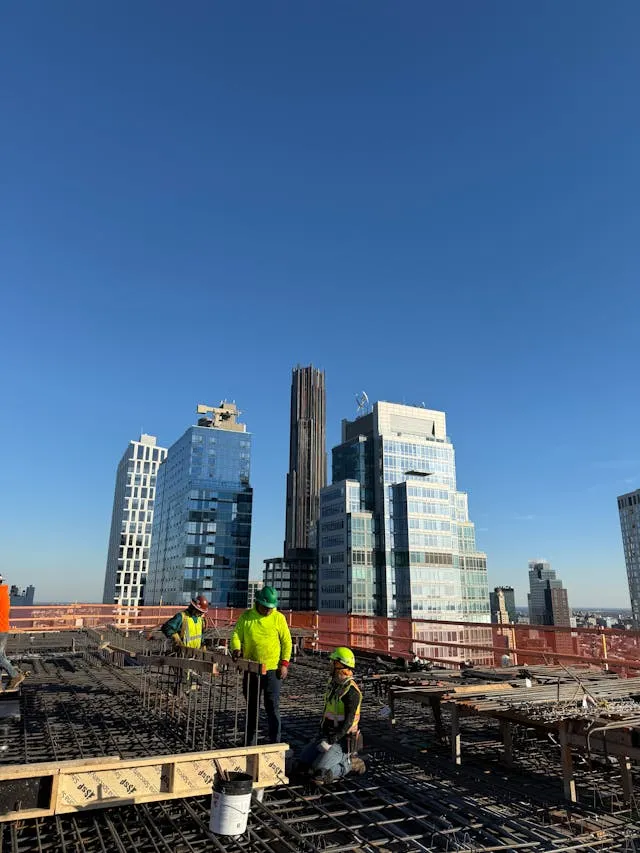
Notably, the current legislative proposals avoid directly addressing those labor concerns, instead focusing on technical and regulatory improvements that could gain wider consensus.
The push toward modular construction reflects a larger shift in how states are approaching housing shortages. By moving part of the building process into controlled factory environments, developers can potentially reduce construction timelines, improve quality control, and limit exposure to weather-related delays.
However, scaling this approach requires alignment across multiple systems — including zoning regulations, financing structures, transportation logistics, and workforce training. Without these changes, experts warn that modular housing will remain underutilized despite its potential advantages.
If successful, California’s legislative effort could serve as a model for other states facing similar housing challenges. The focus on incremental but targeted reforms may help unlock growth in a sector that has long been viewed as promising but difficult to implement at scale.
Originally reported by Stephen Hobbs in Sacbee.