LOS ANGELES — A landmark wildlife infrastructure project in Southern California is approaching completion, even as it faces political scrutiny and public criticism over costs and delays.
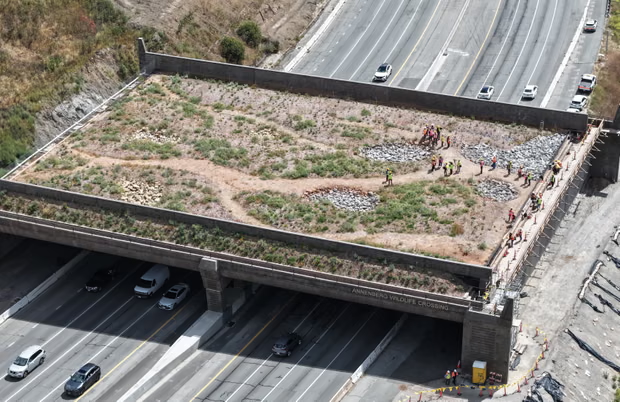
The Wallis Annenberg Wildlife Crossing, spanning the heavily trafficked U.S. 101 freeway in Los Angeles County, is expected to open Dec. 2, marking a major milestone for conservation and transportation infrastructure. Once complete, it will be the largest wildlife crossing of its kind in the world, designed to provide safe passage for species such as mountain lions, bobcats and reptiles across a 10-lane highway that carries roughly 400,000 vehicles daily.
Despite early enthusiasm following its groundbreaking, the $114 million նախագ has become a focal point for criticism from conservative commentators and policy groups. An opinion piece published by the California Post labeled the crossing a “jobs program for environmentalists” and a “multimillion-dollar bridge to nowhere,” sparking broader backlash amplified by national media outlets and political figures.
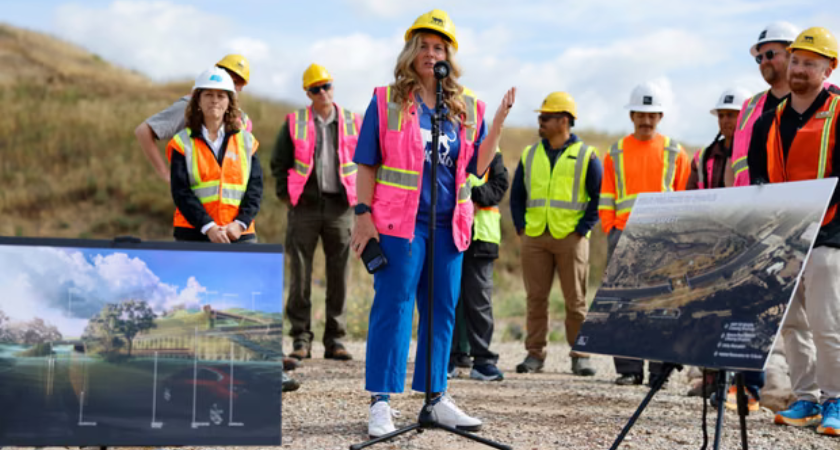
Beth Pratt, California regional executive director for the National Wildlife Federation and a leading advocate for the project, said the criticism escalated into personal attacks and threats.
“The hate was really ugly,” Pratt said. “We had to contact law enforcement.”
Pratt pushed back on claims about cost overruns and project delays, emphasizing that inflation and environmental conditions have affected construction projects nationwide. She noted that the National Highway Construction Cost Index has increased significantly since 2021, contributing to higher expenses across infrastructure developments.
The wildlife crossing’s cost rose from $93 million to $114 million — a roughly 23% increase — which Pratt said remains below the average escalation seen in comparable highway projects during the same period.
“We have experienced no major delays since then,” Pratt said, adding that earlier setbacks were tied to record rainfall and flooding that required schedule adjustments.
Construction crews are continuing work on additional structural elements that will connect the crossing to surrounding habitats in the Santa Monica Mountains. The project includes hauling approximately 3 million cubic feet of soil, installing noise-reducing berms and building wildlife fencing along the freeway corridor.
Ecological features are also taking shape, with more than 6,000 native plants already established across the span. Early signs of biodiversity have emerged, as pollinators and small wildlife species begin to inhabit the area even before completion.
Jeff Sikitch of the National Park Service said the crossing will play a critical role in preserving wildlife populations by reconnecting fragmented habitats.
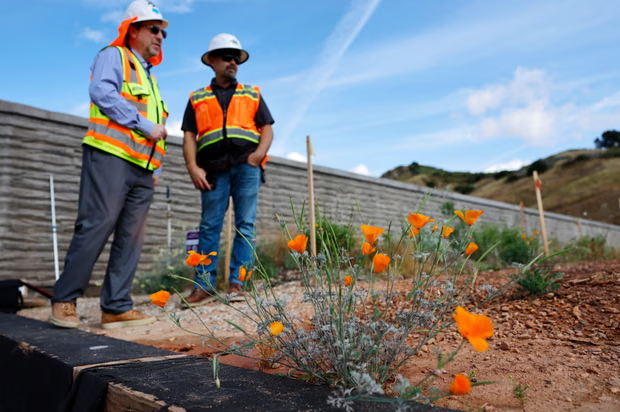
“The amount of available, protected habitat we do have in the Santa Monica Mountains is prime, great habitat for these species,” Sikitch said. “It’s even supporting our last remaining large carnivore, the mountain lion.”
The project will also include more than 50 monitoring cameras to track wildlife movement and measure long-term ecological impact following its opening.
Despite the controversy, project leaders remain focused on the long-term benefits of the crossing, which has been decades in the making.
“This project that is decades in the making – open for business,” Pratt said, reflecting on the upcoming completion.
As infrastructure owners and contractors increasingly prioritize sustainability and resilience, the wildlife crossing stands as a high-profile example of how transportation and environmental goals can intersect — even amid political and financial challenges.
Originally reported by Katharine Gammon in Los Angeles in The Guardian.



.png)