A majority of contractors are preparing to invest in new equipment in 2026, signaling continued confidence in construction activity despite evolving market conditions, according to Equipment World’s latest Tech & Spec Survey.
The report, based on responses from 97 construction professionals surveyed throughout 2025, found that 83% of respondents plan to purchase at least one piece of construction equipment this year. Most respondents were decision-makers, with 83% holding upper- or middle-management roles within their organizations.
“With 83% of responding contractors planning to buy equipment, here's a look at the tech, specs, brands and criteria they're focused on,” the report stated.
Among those planning purchases, the largest share—38%—expect to acquire between one and two machines in 2026. Financing remains the most popular method for acquiring equipment, with 42% of respondents selecting loans as their primary option.
Cash purchases are also common, accounting for 37% of responses, while lease-to-purchase and rent-to-purchase options collectively represent 17% of acquisition strategies.
The survey also sheds light on brand preferences across contractor fleets. Out of more than 25 equipment manufacturers evaluated, the top five brands identified were Caterpillar (60%), John Deere (45%), Bobcat (41%), Kubota (35%) and Case Construction Equipment (34%).
These preferences reflect a mix of established industry leaders and versatile equipment providers, highlighting the importance contractors place on reliability, dealer support and long-term performance.
When it comes to replacing equipment, contractors rely on a mix of resale, trade-ins and auctions. The survey found that 29% prefer selling equipment to other contractors, while 19% opt for auctions. Meanwhile, 39% of respondents favor trading in equipment through dealers.
Replacement timelines vary depending on equipment type. Compact machines such as skid steers and compact track loaders are typically replaced between 2,000 and 6,000 hours of use. Larger machines have longer life cycles, with excavators, dozers and backhoes commonly replaced between 8,000 and 10,000 hours. Wheel loaders often last between 10,000 and 12,000 hours, while articulated dump trucks can reach up to 14,000 hours before replacement.
Maintenance practices also play a significant role in equipment longevity. According to the survey, 83% of contractors perform at least minor repairs and preventive maintenance in-house, reducing downtime and controlling costs.

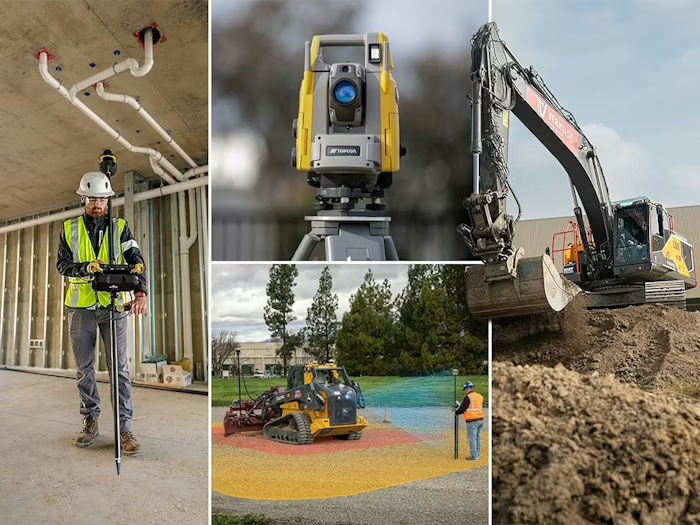
Despite increased industry attention on construction technology, adoption rates remain relatively low. Nearly 65% of respondents reported not using 2D or 3D machine control systems. Only 24.7% use 3D machine control, while 10.3% rely on 2D systems.
Reasons cited for avoiding machine control include high costs, steep learning curves, experienced operators who do not require the technology and limited applicability to certain types of work. Conversely, contractors who have adopted these systems point to benefits such as improved efficiency, greater precision, increased productivity and reduced labor costs.
Fleet management software adoption follows a similar pattern. Just 39% of respondents use digital systems, while others rely on manual tracking methods (40%), spreadsheets (39%) or no system at all (9%).
The findings suggest that while contractors are willing to invest heavily in equipment, widespread adoption of advanced technologies may take longer due to cost and operational barriers.
Originally reported by Equipment World Staff (EQW) in Equipment World.