A century-old estate in Alamo, California, known as the Ball Estate, has entered the luxury real estate market with a listing price of $12.8 million, drawing attention for both its architectural heritage and its historical connection to a prominent infrastructure-building family.

The estate dates back to 1912, when it was originally commissioned by early California developer Walter Arnstein. The home was designed by architect Arthur Brown Jr., whose later work includes landmark civic structures such as San Francisco City Hall and Coit Tower, contributing to the property’s architectural significance.
In 1946, the estate was acquired by Gordon and Dorothy Ball, members of a family associated with construction work tied to California’s highway and infrastructure development. The property later served not only as a private residence but also, at times, as a base connected to the operations of the family’s heavy construction business.
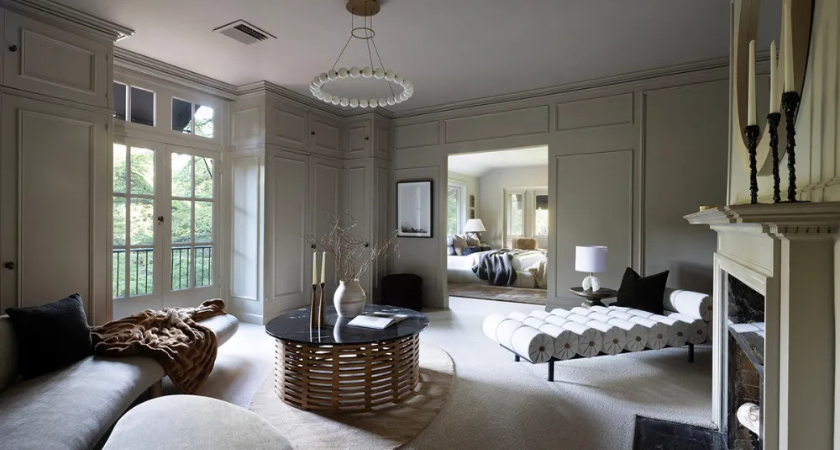
Over time, the estate has remained one of the region’s notable legacy properties, surrounded by redwood trees and positioned on nearly four acres of land. The main residence spans approximately 8,842 square feet and includes six bedrooms, multiple living areas, and original architectural details such as millwork, murals, and period fixtures.
While retaining its historic character, the home has also undergone interior updates blending modern staging and design with preserved traditional features. The property includes amenities such as a pool, pool house, landscaped gardens, and multiple outdoor entertaining spaces.
The listing comes as portions of surrounding land in the area have been gradually redeveloped into residential communities, reflecting ongoing development pressure across parts of the East Bay.
For construction and infrastructure industry observers, the estate highlights the long-standing intersection between major civil construction firms and legacy real estate holdings, particularly among families whose work shaped regional transportation and urban development networks.
High-value historic properties in Northern California continue to attract buyers interested in architectural heritage, privacy, and large-scale estate living, even as regional housing development expands around them.
The Ball Estate remains one of the more recognizable examples of how construction-linked family legacies can extend beyond infrastructure projects into generational real estate assets that retain cultural and historical significance.
Originally reported by Abby Montanez in Robb Report.