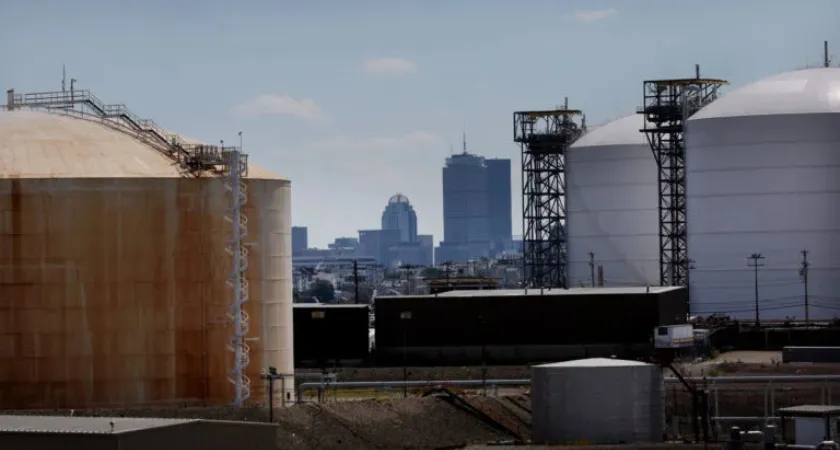
Massachusetts regulators have approved construction of what will become the largest battery energy storage facility in the state, clearing the way for a major redevelopment project in Everett.
.webp)
Texas-based Jupiter Power secured state and local approvals to build the system on the site of the former ExxonMobil tank farm. The project marks the first phase of a sweeping mixed-use redevelopment known as the Docklands.
The facility will occupy approximately 16.5 acres of the 20.75-acre site, according to filings with the Massachusetts Energy Facilities Siting Board. Two electric substations and two underground transmission lines are also part of the plan.
Local approval followed a zoning exemption granted by the City of Everett under its municipal ordinance, allowing the project to move forward on both sections of the property divided by Beacham Street.
The Everett facility will rely on lithium-ion battery technology, housing roughly 816 above-ground enclosures. Each unit will measure about 19.7 feet long, 7.9 feet wide and 9.5 feet tall, and will include integrated cooling and heating systems as well as power-conversion infrastructure.
The system is designed to store surplus electricity generated during periods of low demand and discharge it back to the grid when demand spikes. By balancing supply and demand, the project aims to improve grid reliability across Greater Boston.
Two new substations will increase voltage to connect with the existing Eversource Mystic Substation and decrease voltage when storing electricity. One transmission line will run beneath Beacham Street to link the two new substations, while a second line will connect the Southern Substation directly to the Mystic facility.
With all three substations interconnected, the project will help ensure that excess energy on the electric grid can be captured and dispatched later when needed — particularly during peak usage periods or emergencies.
Beyond reliability, developers say the storage hub will play a strategic role in supporting Massachusetts’ broader clean energy transition. The system is expected to integrate wind-generated electricity and other renewable sources, smoothing out fluctuations inherent in renewable power generation.
The battery storage project represents only the first phase of the broader Docklands redevelopment, a joint venture between Everett Landco and The Davis Companies.
The former tank farm site has long been viewed as a prime opportunity for transformation, given its waterfront location and proximity to Boston. The Docklands project aims to convert the industrial property into a mixed-use neighborhood combining commercial, residential and light industrial uses.
Future phases of development are expected to include approximately 3.3 million square feet of lab and office space, along with 2.8 million square feet of residential space — translating to roughly 3,200 housing units.
Plans also call for about 400,000 square feet of industrial and manufacturing space, 240,000 square feet of retail space and 36,000 square feet designated for maker space. Together, developers envision a multi-purpose district blending employment centers with housing and community amenities.
The redevelopment carries both environmental and economic significance. Repurposing the former oil storage site represents a substantial remediation effort, addressing legacy industrial impacts while positioning the land for modern energy and commercial uses.
Energy storage facilities have become increasingly important as Massachusetts continues expanding offshore wind procurement and other renewable energy initiatives. Large-scale batteries help mitigate the intermittency of renewable sources and reduce reliance on fossil fuel “peaker” plants during high-demand periods.
At the same time, the Docklands project is expected to generate construction jobs in the short term and permanent employment across multiple sectors once completed. City officials have pointed to the development as a catalyst for long-term economic growth in Everett.
With approvals secured, construction of the battery storage system is expected to move forward as the first visible step in reshaping one of the region’s most prominent former industrial sites.
Originally reported by Darin Zullo in Boston,