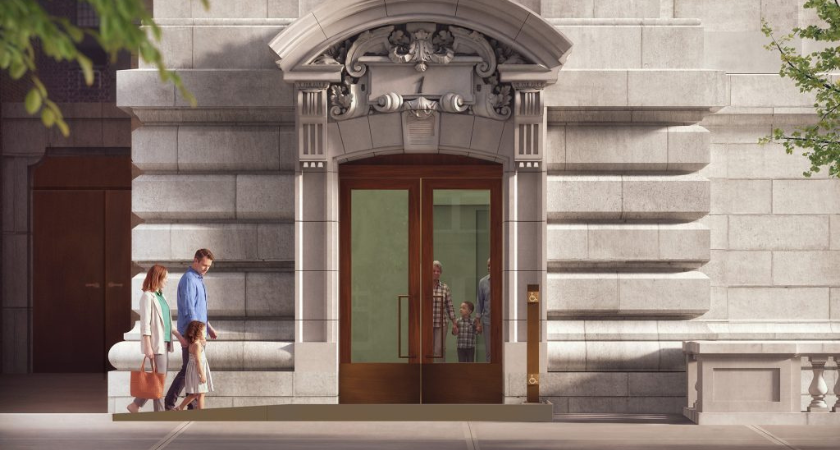
Construction is advancing on a major adaptive reuse project in Manhattan that will transform a historic church property into the future home of the Children’s Museum of Manhattan.
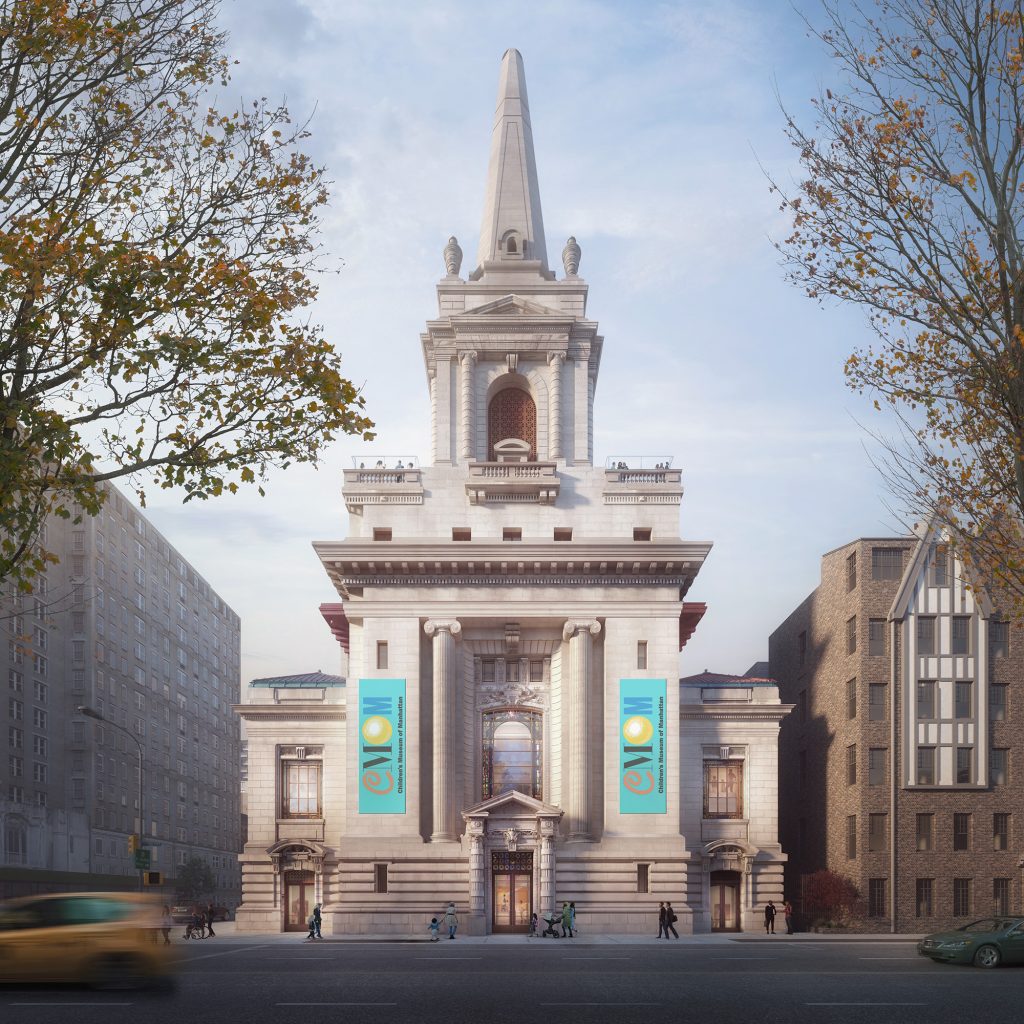
The redevelopment involves converting a century-old religious structure near Central Park into a modern cultural and educational facility designed to serve children and families across New York City.
Shawmut is leading the construction effort, which combines historic preservation with extensive structural modifications intended to support a seven-story museum environment within the existing building shell.
Initial demolition work has been completed, allowing crews to begin complex structural interventions required to introduce new floor systems and circulation components while preserving significant architectural features of the original church.
The project includes restoration of the building’s signature white granite façade, preservation of the existing steeple and protection of key interior spatial elements, including the structure’s barrel-vaulted ceiling.
Large arched windows will remain a central architectural feature of the redeveloped property, helping maximize natural light throughout the museum space.
The adaptive reuse strategy aims to retain the building’s historic identity while integrating contemporary museum infrastructure, accessibility improvements and updated life-safety systems.
Designed by FXCollaborative with exhibit design support from THG Creative, the new museum facility will feature immersive educational exhibits and interactive learning environments targeted toward young children and families.
The expanded facility will also include performance areas, retail space, food service amenities and rooftop public areas overlooking Central Park.
Once completed, the project will mark the first major expansion for the Children’s Museum of Manhattan in more than four decades. The larger footprint is expected to significantly increase visitor capacity and broaden programming capabilities for children from birth through age 10.
The museum currently operates from its existing Upper West Side location while construction continues on the new facility.
The project reflects continued momentum in adaptive reuse construction across major urban markets, particularly for cultural, institutional and community-oriented developments.
Owners and developers are increasingly pursuing conversion strategies for historic and underutilized buildings as cities seek to preserve architectural assets while accommodating modern operational needs.
Complex reuse projects involving religious, civic and landmark structures typically require extensive coordination among preservation specialists, engineers, contractors and public agencies due to structural, code and accessibility challenges.
The Children’s Museum redevelopment underscores growing opportunities in adaptive reuse and historic preservation construction, particularly in dense urban markets where redevelopment sites are limited.
For construction owners and developers, projects of this type demonstrate increasing demand for specialized expertise in structural retrofitting, façade restoration, accessibility upgrades and occupied urban construction logistics. Adaptive reuse projects often require longer preconstruction planning and more collaborative project delivery models because of unforeseen conditions tied to aging structures.
The project also highlights how cultural and institutional organizations are investing in expanded facilities to meet evolving community demand, creating opportunities for contractors with experience in museums, education spaces and public-facing developments.
As municipalities continue prioritizing sustainability and preservation goals, adaptive reuse is expected to remain a significant growth segment within the commercial and institutional construction sectors.
Sourced from Shawmut.