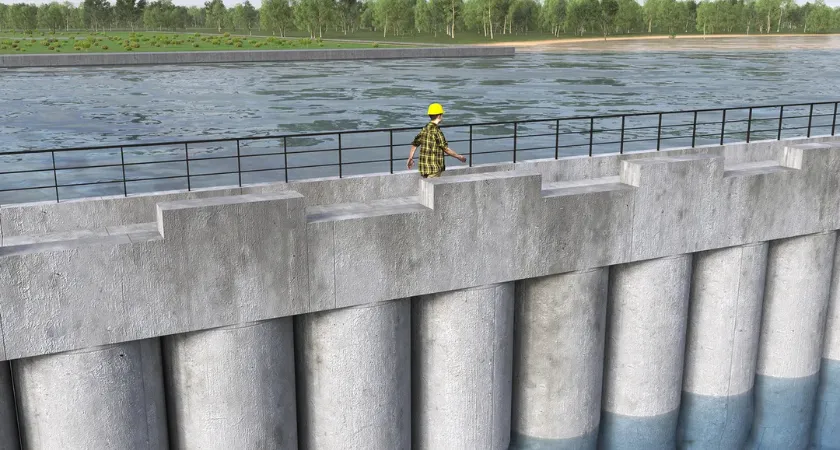
Texas officials have selected Jacobs to help design what could become the largest coastal storm surge barrier gate system in the world, advancing a multibillion-dollar effort to protect communities and critical infrastructure along the Gulf Coast.
.webp)
The Dallas-based engineering firm will lead design work on the Bolivar Roads Gate System — known as The Gate — under a master services agreement tied to the broader Coastal Texas Project. The project is being delivered through a partnership between the Gulf Coast Protection District, the U.S. Army Corps of Engineers and the Texas General Land Office.
The Gate will span Bolivar Roads, the narrow channel connecting the Gulf of Mexico to Galveston Bay, forming a central structural element of the larger coastal protection system.
The Coastal Texas Project carries a congressionally authorized price tag of roughly $35 billion, according to statements from the Gulf Coast Protection District. The federal government is expected to fund approximately 65% of the total cost, with the remainder covered by state contributions, including nearly $1 billion already committed by Texas.
The Galveston Bay Barrier System represents about 85% of the total program cost. Within that system, The Gate is one of seven major features designed to reduce storm surge risk while preserving economic activity along the Gulf Coast.
“There is no fixed dollar amount to the contract with Jacobs,” according to a statement. “Each task order will define scope of work, timelines and costs.”
Rather than a lump-sum award, the agreement enables phased design services as various components of the barrier move through development, environmental review and engineering refinement.
Once completed, the gate system is expected to protect more than 6 million residents and safeguard an estimated $800 billion in regional assets. The barrier will also play a critical role in maintaining operations along the Houston Ship Channel, one of the world’s busiest energy and petrochemical corridors.
“This is a generational investment in Texas’ future,” said Eva Wood, Jacobs executive vice president. “By leveraging our experience on the world’s most complex surge barrier programs, we’re delivering a system designed to focus on the Gulf Coast’s resilience to extreme weather events, while keeping the Houston Ship Channel open for commerce.”
Jacobs’ design approach includes advanced sector gates engineered to limit storm surge intrusion while allowing maritime traffic to continue during normal conditions. The firm also plans to deploy digital modeling tools and long-term operational planning systems to enhance reliability, performance monitoring and lifecycle management.
The Coastal Texas Project gained momentum after repeated extreme weather events, including Hurricane Harvey, underscored the vulnerability of the region’s population centers, refineries and port infrastructure. The Galveston Bay Barrier System is intended to reduce catastrophic flood risk while supporting long-term economic stability across southeast Texas.
In addition to storm protection, the project is expected to generate thousands of engineering, construction and supply chain jobs over multiple phases, reinforcing its role not only as a resilience initiative but also as a major infrastructure investment for the state.
Originally reported by Sebastian Obando, Reporter in Construction Dive.