
Miami-Dade County Public Schools is advancing a major educational redevelopment initiative that will consolidate two existing campuses into a unified arts-focused K-12 facility designed to support long-term enrollment growth, sustainability goals, and community partnerships.
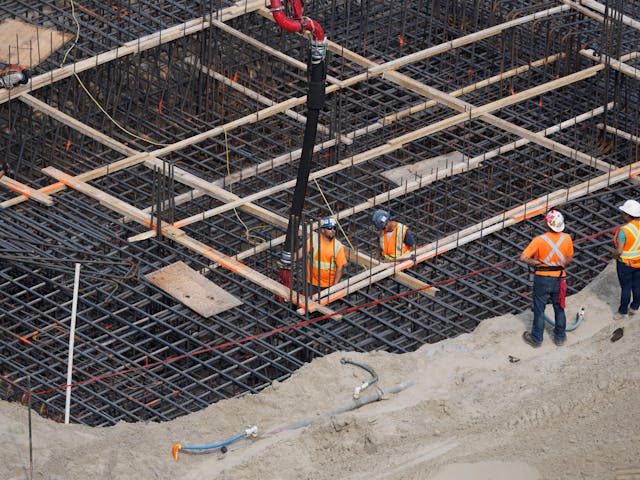
The school board selected James B. Pirtle Construction Company and Silva Architects LLC to lead the estimated $85 million project, which will combine the Arthur & Polly Mays 6-12 Conservatory of the Arts and Pine Villa Elementary into a single campus.
The redeveloped property, to be known as the Arthur & Polly Mays K-12 Conservatory of the Arts Academy, will include separate Lower Academy and Upper Academy facilities serving students from kindergarten through 12th grade.
Plans call for the demolition of 13 buildings from the existing conservatory campus and the retrofit of 15 structures from Pine Villa Elementary. The project is scheduled for completion in June 2029.
The campus design includes specialized learning environments tailored to arts and academic programming, including music and band rooms, journalism classrooms, science labs, broadcasting facilities, computer labs, dance and gymnastics spaces, and a Black Box Theatre for language arts and performance education.
A new 700-seat auditorium with support spaces for productions and events is also planned, alongside expanded dining facilities, administrative offices, student services areas, and partnership space for the Children’s Home Society.
Site improvements include redesigned entry plazas, secure student gathering areas, covered outdoor spaces, playgrounds, athletic facilities, and transportation infrastructure with dedicated bus and parent drop-off zones.
The project also reflects increasing emphasis on sustainability standards in public-sector construction. Miami-Dade schools officials said the buildings are being designed to achieve an Energy Use Intensity target of 25 or lower — significantly below average building energy consumption levels — while complying with nationally recognized green building certification systems.
The redevelopment effort will also include energy modeling and life-cycle cost analysis intended to improve long-term operational efficiency and reduce energy consumption over the building’s lifespan.
Separately, Miami-Dade County Public Schools is pursuing a public-private partnership initiative involving adjacent land parcels that could support workforce housing for teachers, school staff, and the surrounding community.
For public-sector owners and developers, the Mays K-12 redevelopment project highlights the growing demand for large-scale modernization efforts that combine educational programming, sustainability objectives, and long-term community planning into a single development strategy.
The inclusion of energy performance targets and life-cycle cost analysis reflects how school districts and public agencies are increasingly prioritizing operational efficiency alongside upfront construction costs. Owners may continue adopting stricter sustainability benchmarks as energy performance regulations and long-term maintenance considerations become more influential in procurement decisions.
The project also demonstrates how public-private partnerships are expanding beyond traditional infrastructure delivery to address workforce housing and broader community development challenges tied to public institutions.
Originally reported by Community News Releases in Community News Papers.