EAST SOMERVILLE, Mass. — A new approach to construction that blends robotics with modular building techniques is gaining attention as a potential solution to Massachusetts’ persistent housing shortage.
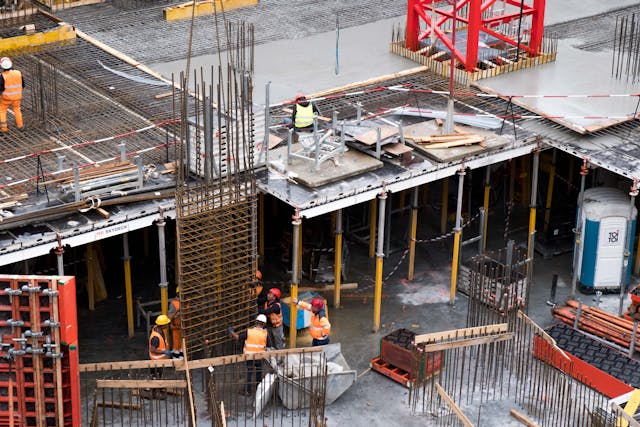
At a residential site in Somerville, Massachusetts, crews are completing a triple-decker home that looks like a conventional project on the surface. But much of the structure was built off-site in a factory operated by Reframe Systems, where workers collaborate with industrial robots to assemble large sections of housing units.
Those prefabricated sections are then transported and assembled on-site, reducing construction time and potentially lowering costs.
The push for modular construction comes as Massachusetts faces a significant housing gap. A 2025 report from the Massachusetts Executive Office of Housing and Livable Communities estimated the state needs about 222,000 additional homes over the next decade, even as permitting rates remain among the lowest nationwide.
Proponents argue that volumetric modular construction — where entire rooms are built in a factory — can streamline timelines compared to traditional “stick-built” methods.
Reframe CEO Vikas Enti said the company’s process allows for substantial pre-assembly before materials ever reach a jobsite.
“All the structural systems, most of the wiring, most of the plumbing, all the windows — all of those (things) were pre-built in the factory,” Enti said. “Thirty-five percent of the walls and ceilings were robotically fabricated for these units, and our percentages have kept improving.”
According to Enti, projects that might typically take 12 to 18 months using traditional methods can be completed in a matter of months. One recent project began in December and is expected to be ready for occupancy by June.
Still, experts caution that while the technology shows promise, broader adoption faces hurdles.
“There’s probably more tailwinds” supporting modular construction, said Ivan Rupnik, “but there’s also still headwinds. It’s a complicated situation.”
Despite its potential, modular construction must navigate regulatory barriers that affect all building projects. Zoning rules, permitting requirements and inspection processes can slow development regardless of construction method.
Sukanya Sharma of the Metropolitan Area Planning Council said bureaucratic processes continue to add time and cost to projects.
Labor considerations also remain a key issue. While Reframe’s projects have largely avoided union labor so far, industry leaders anticipate increased scrutiny as modular construction scales.
“At a surface level, this definitely can be seen as a threat” to traditional construction jobs, Enti acknowledged.
Union leaders have expressed concern about oversight and quality control when construction shifts away from job sites.
Frank Callahan said, “One of my long-term concerns is that once this takes off, what’s to keep these companies from building a factory over the New Hampshire border? The further you get away from the job site, the less oversight there is.”
Even with these concerns, modular construction is gaining traction. Companies like Reframe and Integrity Modular Design & Construction are expanding operations and exploring new projects across the state.
Reframe is currently seeking a location for a larger manufacturing facility capable of producing up to 200 homes annually — a significant increase from its current capacity of 30 to 40 units per year.
The company also plans to begin construction on a dozen single-family homes in Devens, Massachusetts, with homes priced around $789,000.
Sharma said modular construction should be viewed as one tool among many to address housing shortages.
“[It] is one of the strategies that can help with the housing crisis,” she said, though she emphasized it is “not the silver bullet.”
Originally reported by Scott Kirsner in Mass Live.



.png)