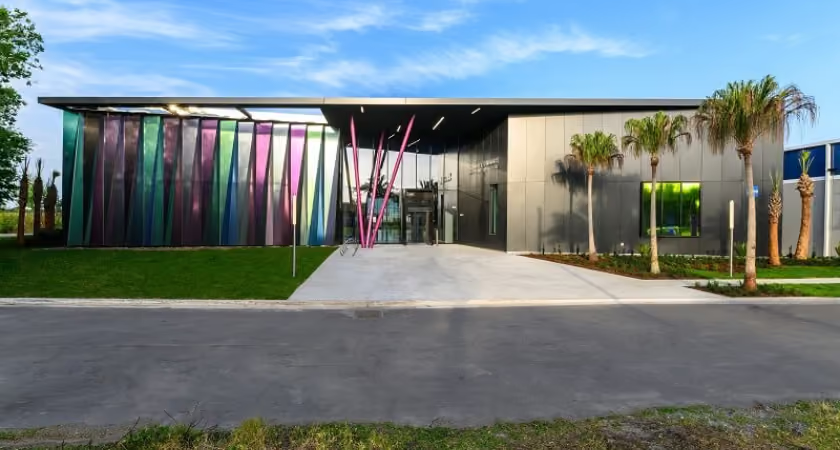
• Hoar Construction has completed the 34,740-square-foot Center for Aerospace Technology II at Embry-Riddle Aeronautical University.
• The facility provides specialized laboratory and research space for aerospace technology development.
• The project includes simulated space and atmospheric testing environments and a clean room for equipment preparation.
• Construction teams coordinated closely with airport operations due to the site's proximity to active flight paths.
• Value engineering and advanced project planning helped maintain budget and schedule objectives.
• The project reflects continued investment in research infrastructure tied to aerospace and advanced technology industries.
A growing focus on aerospace innovation and advanced technology research is driving demand for highly specialized construction projects across the education and research sectors.
Embry-Riddle Aeronautical University has expanded its research capabilities with the completion of the Center for Aerospace Technology II, a new facility located within the university's Research Park in Daytona Beach, Florida. The project adds 34,740 square feet of dedicated laboratory and research space designed to support scientists, researchers and students developing next-generation aerospace technologies.
The single-story building includes laboratories capable of simulating space and atmospheric conditions, allowing researchers to conduct testing and development work in controlled environments. The facility also incorporates a clean room designed to prepare and sterilize equipment intended for aerospace applications.
For contractors and owners, the project demonstrates the increasing complexity of research-oriented facilities, which require specialized building systems, strict environmental controls and advanced coordination among project teams. Such facilities often demand a higher level of technical expertise than traditional academic buildings.
Construction of the facility presented unique operational challenges because of its location near Daytona Beach International Airport. Frequent aircraft activity required extensive coordination to ensure construction equipment operations did not interfere with flight paths. Careful planning and communication helped maintain safety while keeping the project on schedule.
The project team also utilized value engineering strategies to balance performance requirements with budget objectives. As research institutions continue expanding innovation-focused programs, owners are increasingly seeking construction approaches that maximize long-term functionality while controlling capital costs.
The completion of the facility aligns with broader industry trends in aerospace, defense and advanced manufacturing, where universities are investing in specialized infrastructure to support research partnerships, workforce development and technology commercialization. Research parks associated with higher education institutions are becoming increasingly important hubs for collaboration between academia and industry.
For owners and developers, the project highlights the growing importance of specialized research infrastructure as a driver of economic development and innovation. Facilities supporting aerospace, engineering and technology research require sophisticated planning, specialized construction expertise and strong stakeholder coordination.
As demand for advanced laboratory environments continues to increase, projects that successfully balance technical performance, cost management and operational requirements may serve as models for future research and development facilities nationwide.
Source: Hoar Construction.