Public recreation projects are increasingly being designed to accommodate users beyond young children, creating new considerations for owners planning park renovations, community facilities and outdoor amenity investments. Northwest Playground Equipment has highlighted the growing use of fitness and sports features that support teen, adult and family participation.
Traditional playgrounds generally target younger children, leaving a gap in recreational offerings for teenagers and adults. Northwest Playground Equipment points to obstacle courses, climbing elements, fitness circuits, balance features and gathering areas as options communities can incorporate into park projects.
The approach can allow a single recreation site to serve multiple age groups while providing opportunities for physical activity and informal social interaction. Equipment manufacturers such as Trekfit and Exofit are part of this broader outdoor recreation segment.
The design trend also places greater emphasis on self-directed activities rather than organized sports. Fitness features can provide strength, coordination, balance and cardiovascular activities within public park environments.
Teenagers represent a specific design challenge for community recreation planners because many conventional playgrounds are geared toward younger children. Northwest Playground Equipment identifies teen-oriented spaces as an emerging area of park planning, with particular attention to creating environments that appeal to girls as well as boys.
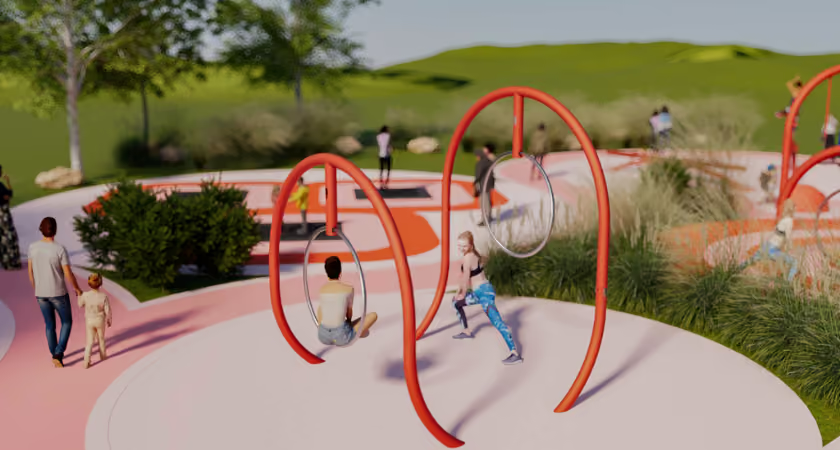
Trekfit's Aura Park concept incorporates aerial climbing and hanging elements, balance structures, obstacle features, fitness equipment and slacklines. The combination is intended to support movement while also providing opportunities for social interaction and exploration.
For public owners, the shift toward age-diverse recreation can affect equipment selection, site planning and the allocation of park improvement budgets. Projects that combine active recreation with social spaces can broaden the potential use of existing park infrastructure.
The expansion of fitness-oriented playgrounds reflects a broader move toward multi-generational public spaces. Owners evaluating park upgrades can consider amenities that serve teenagers and adults alongside conventional children's play areas.
For contractors and developers involved in municipal recreation work, these projects can involve a wider mix of site improvements, specialized equipment installation, accessibility considerations and outdoor gathering areas. The result is a recreation model that extends beyond traditional playground construction and supports more varied community use.
Source: Northwest Playground.