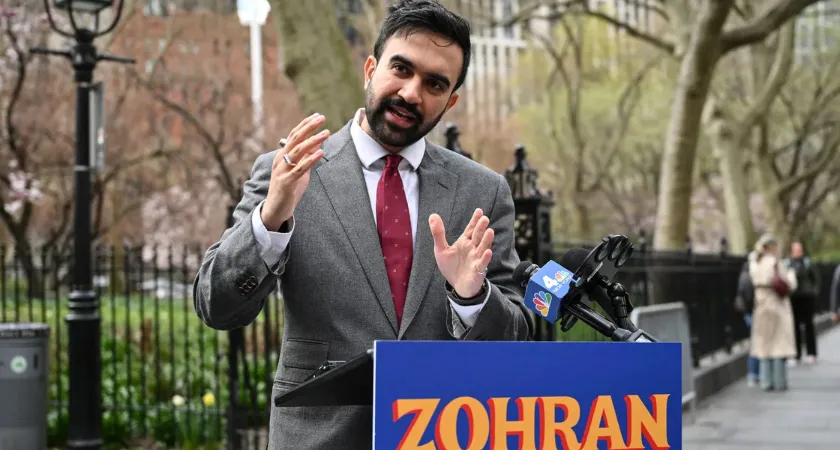
Zohran Kwame Mamdani has unveiled a major initiative aimed at accelerating affordable housing development across New York City, cutting more than two years from the traditional approval timeline and opening the door for faster project delivery on public land.
.webp)
Announced on March 25, the Neighborhood Builders Fast Track program introduces a streamlined development process designed to eliminate long-standing bureaucratic delays. The initiative was rolled out alongside Deputy Mayor for Housing and Planning Leila Bozorg and Housing Preservation and Development (HPD) Commissioner Dina Levy.
At the center of the program is a pre-qualification system for developers using a simplified Request for Qualifications (RFQ), reducing the time needed to select development partners by nearly half. This alone trims approximately eight months from the process.
When paired with the newly adopted Expedited Land Use Review Procedure — approved by voters in November — the initiative removes more than two years from pre-development timelines.
"Our city is facing a historic housing crisis — the last thing we need to do is tie ourselves in red tape," Mamdani said. "The Neighborhood Builders Fast Track will speed up housing development and make it faster to build on city-owned land."
City officials have already identified three initial sites that will move forward under the new program:
Together, these parcels are expected to deliver up to 300 affordable housing units. Notably, about 100 of these units in the Bronx and Queens developments will be designated for affordable homeownership, expanding opportunities beyond rental housing.
The city is targeting a May 8 deadline for RFQ submissions and is prioritizing outreach to nonprofit developers as well as minority- and women-owned business enterprises (MWBEs). Over the next two years, officials anticipate the program could facilitate the development of as many as 1,000 housing units citywide.
The Fast Track initiative is part of a wider housing strategy introduced at the start of Mamdani’s administration. On his first day in office, the mayor signed executive orders establishing two task forces:
Both groups are expected to release recommendations later this spring, potentially shaping additional reforms that could further accelerate construction timelines.
"Public land is a public good — and we will not let city-owned sites sit idle while New Yorkers struggle to find an affordable home," HPD Commissioner Dina Levy said.
The initiative arrives as New York City faces one of the tightest housing markets in the country, with vacancy rates hovering around 1.4%. For construction firms, developers and subcontractors, the program represents a meaningful shift in how projects are initiated and delivered.
By introducing pre-qualification, the city is effectively creating a predictable pipeline of opportunities, allowing firms to engage earlier in the development cycle. This could reduce bidding uncertainty and improve planning for labor, materials and financing.
Additionally, the emphasis on public land development signals a long-term commitment to leveraging government-owned assets to address housing shortages — a strategy that could reshape the city’s construction landscape through 2027 and beyond.

From a project delivery standpoint, faster approvals may also help mitigate cost escalations tied to prolonged pre-construction phases, including inflation, financing delays and regulatory uncertainty.
The Neighborhood Builders Fast Track reflects a growing national trend among major cities to streamline housing approvals amid worsening affordability challenges. By compressing timelines and simplifying procurement, New York City is attempting to address one of the most persistent bottlenecks in housing production: pre-development delay.
For contractors, the program’s success will depend on how efficiently agencies implement the new systems and whether approvals truly move at the promised pace. If successful, the model could serve as a blueprint for other municipalities looking to accelerate housing delivery while maintaining affordability requirements.
At the same time, the focus on nonprofit and MWBE participation may diversify the development ecosystem, creating new opportunities for smaller and mission-driven firms to compete in a space often dominated by larger players.
Originally reported by New York City Government.