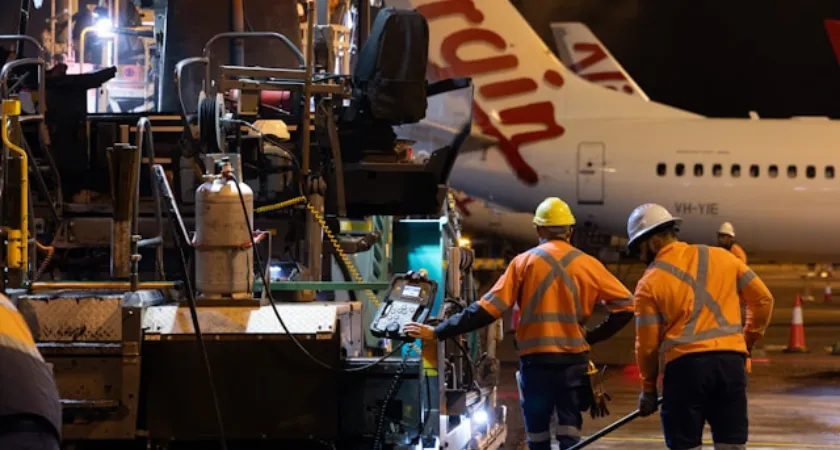
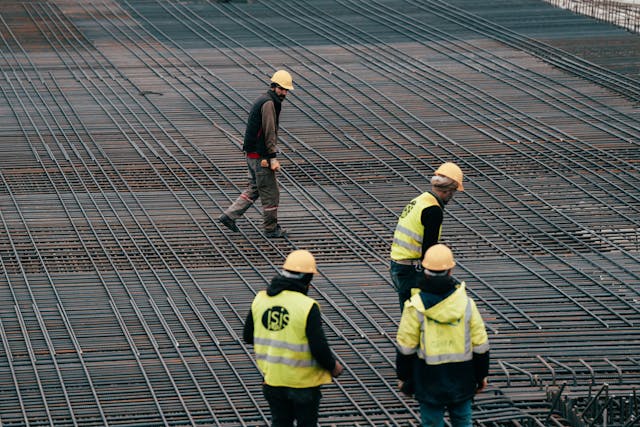
CHICAGO — Construction at O'Hare International Airport is shifting into its most visible phase yet. After months of demolition, excavation and underground foundation work, the $1.3 billion Concourse D project is entering vertical construction this spring — a milestone that will put thousands of workers on site and reshape Chicago's skyline one steel column at a time.
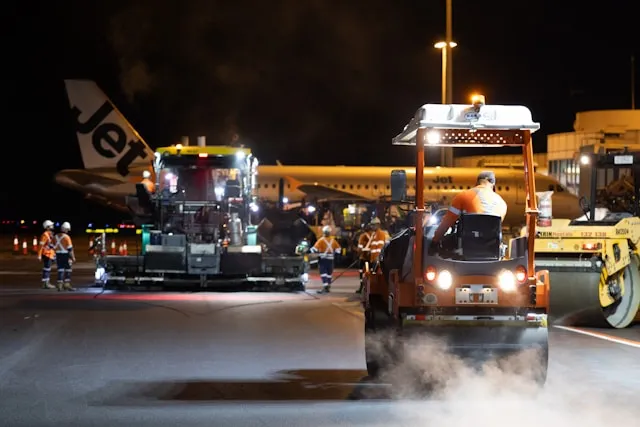
The project is being delivered by AECOM Hunt Clayco Bowa, a joint venture serving as construction manager at risk. The team has now secured every permit needed to carry the work through completion, including caisson, foundation, tower crane and a full building permit — the final regulatory clearance issued in early 2026. Structural steel is already being installed on site. Completion is scheduled for late 2028.
"With the improvements we are making at Concourse D alone we are generating more than 3,800 construction jobs that creates a ripple effect across Chicago's entire community," Mayor Brandon Johnson said at the groundbreaking.
Concourse D will be the first major concourse built at O'Hare in more than 30 years. The project broke ground in August 2025 under the ORDNext banner — the next phase of the city's $8.5 billion O'Hare 21 Terminal Area Plan, originally launched in 2018 to reimagine the airport for the next century of air travel.
The new concourse was designed by Skidmore, Owings & Merrill, working in collaboration with Ross Barney Architects, Juan Gabriel Moreno Architects and Arup. The design draws inspiration from O'Hare's original name, Orchard Field — a reference to the apple orchard that once occupied the site. That history is expressed through a series of dramatic tree-like structural columns that branch outward to support a long-span roof 150 feet wide, reducing interior columns by nearly half and opening the floor plan for improved gate flexibility and passenger circulation.
Concourse D will include 19 new gates designed for narrow-body aircraft, with the flexibility to adapt 18 of those gates into nine larger ports that can accommodate wide-body planes. Planned amenities include more than 20,000 square feet of lounge space, 30,000 square feet of commercial space and a 450-square-foot children's play area.
The project also entails approximately $300 million in related infrastructure improvements, such as a new central cooling facility located in the center of the airfield, along with pavement and utility work to support the upcoming Concourse E.
Concourse D is only the beginning. Additional projects to be delivered through ORDNext include replacing Terminal 2 with the O'Hare Global Terminal, constructing a second satellite concourse designated Concourse E with 24 gates, and building a new underground tunnel to connect passengers, airport employees and baggage operations between the expanded facilities.
For contractors and skilled trades firms tracking major Illinois work, bid opportunities remain open. Construction bid opportunities are available at ORD21.com/bids.
O'Hare recorded more than 8 million passengers in June 2025 — the highest June total in its 70-year history and the second-busiest month ever. That demand pressure underpins the urgency of the expansion. "Airport planning is not for the next year, it's for the next generation," Chicago Department of Aviation Commissioner Michael McMurray said. "If you're not planning ahead then you are falling behind the curve."
When complete, ORDNext is projected to deliver 14 percent more gate capacity, greater operational flexibility for hub carriers United Airlines and American Airlines, and a modernized passenger experience from curb to gate at one of the busiest airports in the world.
This article is based on reporting originally published Aug. 19, 2025, by Katharine Carlon at Construction Dive and by Marci Tizer at Engineering News-Record. Additional permitting updates were reported by Urbanize Chicago. The original Construction Dive article can be found at constructiondive.com. The ENR report is available at enr.com.