Wisconsin construction leaders say safety responsibility is shifting more heavily onto contractors as federal oversight slows and the industry brings in thousands of new apprentices to meet surging demand.
.webp)
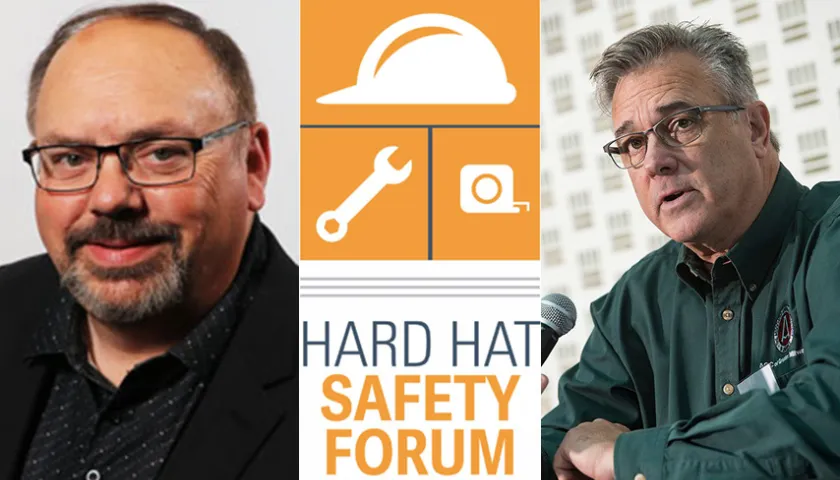
During the 2026 Hard Hat Safety Forum hosted by The Daily Reporter, Ethan Duran spoke with Don Moen of Associated Builders and Contractors of Wisconsin and Dan Burazin of the Associated General Contractors of Greater Milwaukee about the state’s evolving safety landscape.
The discussion centered on tightening labor markets, megaproject workforce pressures and reduced staffing at the Occupational Safety and Health Administration (OSHA).
Panelists revisited last year’s prediction that OSHA would face staffing constraints due to government shutdowns and funding limitations. While the agency retains authority through citations and emphasis programs, day-to-day oversight capacity has thinned.
“For accidents, we’re about the same (as last year),” Burazin said. “That has to do not so much with OSHA but with contractors themselves taking initiative to make sure somebody’s watching over some of these people, mentors if you will, to make sure these guys and gals have someone they can turn to.”
Burazin emphasized that safety cannot become secondary simply because federal enforcement slows.
“Just because the government shuts down does not mean we have to take a back seat on safety,” he added.
Last year, ABC of Wisconsin met with U.S. Labor Secretary Lori Chavez-DeRemer at a job site in Mequon as part of her nationwide outreach effort to meet with tradespeople in all 50 states. The association also met with OSHA officials at the start of the agency’s fiscal year.
Moen said agency representatives signaled an interest in improving communication with small businesses.
“They want collaboration amongst everybody,” he said.
Roughly eight years ago, OSHA had five compliance assistants working with companies across Wisconsin. The final assistant retired this past year, and the agency chose to replace those positions with inspectors.
“but that’s more reactive,” Moen said, contrasting inspections with proactive training and guidance.
Despite enforcement headwinds, Wisconsin construction fatalities remain comparatively low. The state recorded five construction workplace fatalities in the past year, compared to roughly 500 nationwide.
Both Moen and Burazin stressed that even one fatality is too many, but credited advanced training programs and industry-led initiatives for keeping incident rates down.
Moen noted that safety infrastructure — including toolbox talks and in-house safety personnel — remains strong, even as hiring accelerates. Falls continue to be OSHA’s top focus area, followed by amputations, which are more common in general industry settings.
While OSHA has proposed a federal heat standard, Moen predicted it is unlikely to take effect. However, he said OSHA will maintain a heat-related emphasis program and ABC plans to continue training members accordingly.
“As an emphasis program, we need to make sure it’s being done,” he added.
Other key safety risks under scrutiny include trenching, hexavalent chromium, silica and asbestos exposure.
Labor shortages remain intertwined with safety concerns — especially as Wisconsin attracts capital-intensive megaprojects requiring extensive safety oversight and skilled labor.
Burazin pointed to large-scale developments such as the OpenAI and Oracle data center in Port Washington, Eli Lilly and Company in Kenosha County and Microsoft in Mount Pleasant.
These projects were “deluged with requirements for trades people and safety personnel,” Burazin noted.
Owners of hyperscale data centers and advanced manufacturing facilities often impose heightened safety and compliance requirements, increasing the demand for certified professionals and structured training systems.
Construction unions continue to shoulder much of the apprenticeship training burden, including embedded safety instruction. Still, balancing productivity with workforce development remains a challenge.
“With job sites so busy, that’s a challenge,” Burazin said.
“We want to train our people, but we need to get the job done. So, there’s a delicate balance of making sure people are getting information as needed,” Burazin said.
ABC of Wisconsin currently supports approximately 2,500 apprentices, a number expected to grow after the association acquired a new training facility in the Madison area. The group conducts its own safety surveys and accident research to track trends.
Moen cited research from Washington state showing that some job sites were marginally safer when apprentices and journeyworkers worked side-by-side compared to sites without formal apprenticeship integration.
.webp)
“Our industry is growing fast and we want the safest person out there… With safety training and oversight, it’s still safer, in my opinion, to put an apprentice out there than a non-apprentice, that may not have had the training above and beyond what the company does,” Moen said.
With OSHA staffing stretched thin and megaproject activity accelerating, Wisconsin contractors appear to be moving toward a more self-regulated safety model. Industry associations are expanding peer collaboration, training certifications and data-sharing initiatives to fill oversight gaps.
As federal enforcement shifts toward targeted emphasis programs rather than routine compliance assistance, contractor-led mentorship, apprenticeship integration and jobsite-level accountability are emerging as the backbone of safety performance.
For Wisconsin’s construction sector, the message from the Hard Hat Safety Forum was clear: oversight may ebb and flow, but responsibility for protecting workers remains constant — and increasingly rests within the industry itself.
Originally reported by Ethan Duran in The Daily Reporter.