SAN MARCOS, Calif. — As cities across California struggle to meet aggressive state housing mandates, San Marcos is emerging as a standout performer — leveraging long-term planning, strategic development and public-private collaboration to stay ahead of its targets.
.webp)
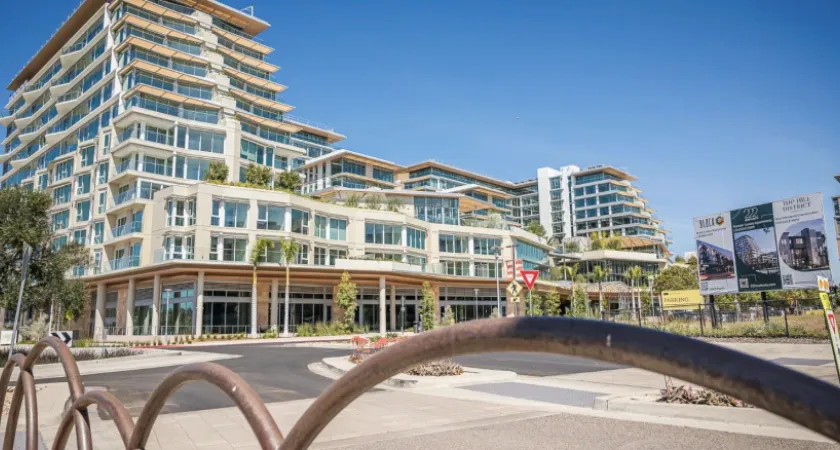
At the center of that success is North City, a 200-acre mixed-use development near California State University San Marcos that has transformed suburban land into a dense, walkable urban hub. The project blends residential, retail and commercial space and has become a key driver in helping the city meet its housing obligations across multiple income categories.
State housing laws require municipalities to plan for and permit housing across four income levels: very low, low, moderate and above moderate. Cities in San Diego County have until 2029 to meet these benchmarks. San Marcos is currently on track to meet goals in three of the four categories and has already exceeded its moderate-income target.
The city has permitted 871 moderate-income units — notably without deed restrictions — with pricing determined by market conditions.
City leaders attribute much of this progress to proactive planning and a willingness to work closely with developers. Mayor Rebecca Jones emphasized that success starts with intentional land-use strategy.
“In the more downtown urban areas, it makes sense to have a little more density,” Jones said.
North City reflects that approach. Originally envisioned in 2004 as a downtown for a city that lacked one, the development now includes thousands of residential units, parks, retail, restaurants and office space. Once complete, the $2 billion project is expected to deliver 3,400 homes, including roughly 400 affordable units.
Jones said her administration takes a hands-on role in negotiating with developers to ensure projects align with community needs while remaining economically viable.
“My job is to figure out how to get the best development possible. I’ve had instances where they’ve worked with me and sat down and we’ve tried to figure out how they could build something that can fit within the parameters of what’s already approved today,” she said. “I also don’t want my whole entire Housing Element to be opened up because I try to say no to a project and get sued over it; that isn’t beneficial to my community either.”
That collaborative approach is increasingly being adopted across the region, according to Erik Bruvold, CEO of the San Diego North Economic Development Council.
“In phase one, I think you saw a lot of leaders be very critical about state mandates and be very frustrated with them, and so they approved any project that came across the desk kind of holding their nose,” Bruvold said. “I think now, we’re in an interesting second phase where you see throughout North County, elected leaders who may not be all that happy with the state policies, but are now proactively working with folks within the confines of the state law to try and get projects that they feel meet community needs.”
While San Marcos benefits from available land, future growth across the region will depend more heavily on infill development — building within already developed areas. That shift brings added pressure on aging infrastructure systems.
Bruvold pointed to the need for renewed funding mechanisms, including a potential revival of redevelopment agencies, which were dissolved in 2012 but historically played a major role in financing infrastructure and affordable housing.
“While the particulars of what is missing do vary city to city, in so many cases, what we have is infrastructure that was built to accommodate development in the fifties and sixties,” he said. “And to be able to do infill mixed-use or infill residential development, we just need bigger infrastructure, and redevelopment would’ve been a critical tool to do that.”
.webp)
Despite its progress, San Marcos still faces challenges in meeting very low-income housing targets — a common hurdle across California.
Jones also expressed skepticism about one-size-fits-all mandates from the state.
“These mandates coming from Sacramento, they don’t know the specific needs of our community and what our community wants,” she said. “I think local control, and yes, there are definitely going to be some examples where cities are not doing the right thing, but for the most part, cities do want to do the right thing.”
For contractors and developers, San Marcos offers a clear takeaway: early planning, flexible density strategies and strong public-private coordination can unlock sustained construction pipelines — even in one of the nation’s most regulated housing markets.
This article is based on reporting by Tigist Layne, originally published by Voice of San Diego. Read the original article here: https://www.voiceofsandiego.org