Schneider Electric reported record revenue growth in the first quarter of 2026, fueled by surging demand from data centers and increasing global emphasis on energy security and electrification.
.jpg)
The company announced $11.4 billion in quarterly revenue, representing an 11.2% organic increase year over year. Much of that growth was driven by its energy management segment, which saw a nearly 13% increase compared to the same period in 2025.
Executives pointed to the rapid expansion of artificial intelligence infrastructure and geopolitical uncertainty as key factors accelerating demand for electrified and digitized building systems.
“The energy transition is now increasingly central to energy security and sovereignty … alongside the rapid adoption of digital and AI-enabled technologies,” said Olivier Blum, CEO of Schneider Electric.
Demand from data centers emerged as a major growth driver for the company, with Schneider reporting double-digit gains in that segment. North America led the expansion, though other global regions also contributed to increased activity.
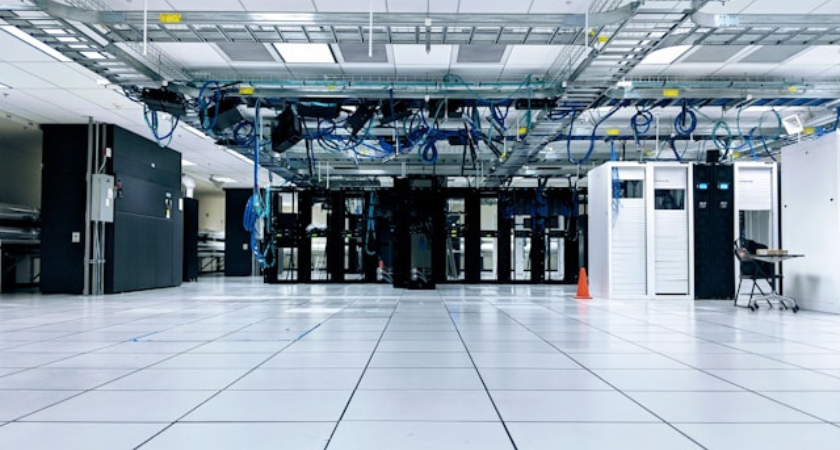
The rise of AI-ready computing infrastructure has prompted operators to scale both advanced and traditional data center architectures. Schneider highlighted growing demand for liquid cooling systems, which are essential for managing heat generated by high-density server racks powering next-generation AI chips.
Revenue in North America’s energy management segment grew 15.9% year over year, underscoring the region’s leadership in data center development. Schneider also noted continued momentum in its broader building solutions business, particularly in government and healthcare facilities.
Company leadership emphasized its “energy intelligence” strategy as a central pillar of long-term growth. The approach focuses on integrating building management, automation and power systems into unified digital platforms capable of predictive and automated decision-making.
According to Schneider, transitioning from siloed systems to connected frameworks can reduce energy costs, minimize equipment downtime and improve operational efficiency. These systems also support faster incident response and extend asset lifespans.
.jpg)
In the data center sector, Schneider offers end-to-end solutions that span project lifecycles. These include digital twin capabilities developed in partnership with NVIDIA and ETAP, cooling technologies from its Motivair subsidiary, operational tools through its AVEVA software portfolio and building management via its EcoStruxure platform.
Despite strong performance, Schneider executives cautioned that geopolitical and macroeconomic uncertainty could impact future growth. The company reported weaker performance in the Middle East and Africa, where regional tensions weighed on demand.
Still, Schneider reaffirmed its financial outlook for 2026, citing continued investment in electrification, digitalization and energy efficiency as long-term growth drivers.
Originally reported by Brian Martucci in Facilities Dive.
.png)


.png)