Donald Trump is undertaking a sweeping redesign of Washington, D.C., launching a series of high-profile construction and renovation projects that are drawing both attention and criticism.

The initiatives range from a $400 million ballroom at the White House to upgrades of cultural landmarks and proposals for entirely new monuments. The scope of the effort has prompted comparisons to past presidential building campaigns, including those under Theodore Roosevelt and Harry Truman.
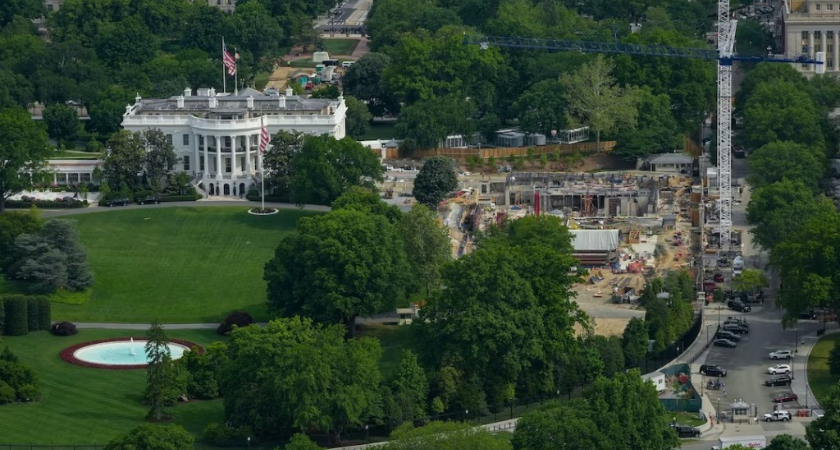
At the center of the overhaul is a planned 90,000-square-foot ballroom designed to host up to 1,000 guests. Trump has described the project as “the Greatest of its kind ever built,” with funding expected to come from private donors and corporations.
Construction is already underway following the demolition of the East Wing, a move that has sparked backlash from preservationists and portions of the public. Critics argue the new structure could overshadow the historic White House and erase significant architectural heritage.
Despite legal challenges, an appeals court in April allowed work to continue, with further hearings scheduled in June.
Beyond the White House grounds, Trump has proposed a $200 million renovation of the John F. Kennedy Center for the Performing Arts. The project includes a two-year closure beginning July 4 to address structural issues such as aging plumbing and deteriorating masonry.
The administration has also floated plans for a massive “Independence Arch” near the Lincoln Memorial. The proposed structure, estimated at 250 feet tall, would rival major landmarks in scale, though questions remain about feasibility due to potential conflicts with flight paths near Ronald Reagan Washington National Airport.
Additional changes include modifications to the National Mall’s Reflecting Pool, where Trump ordered resurfacing and restoration work, as well as aesthetic upgrades to the White House grounds and interiors.

The broader construction push reflects a mix of modernization efforts and personal design preferences. Inside the White House, Trump has overseen extensive redecorations, while exterior changes include replacing the Rose Garden lawn with a stone patio and installing new flagpoles.
Supporters argue the projects address aging infrastructure and enhance national landmarks, while critics question the costs and the impact on historically significant sites.
The scale and pace of development have also introduced practical challenges, including ongoing construction noise and disruption in central Washington.
As work continues, Trump’s ambitious building agenda is likely to remain a focal point of debate, highlighting tensions between infrastructure modernization, architectural preservation and public priorities.
Originally reported by The Standard.
.png)


.png)