A new recreational infrastructure project aimed at strengthening outdoor tourism and community connectivity has been completed in Silver Bay, Minnesota, with the opening of a $4.36 million multi-modal trailhead center.
Constructed by Kraus-Anderson’s Duluth office, the facility serves as a gateway for visitors accessing the region’s growing network of recreational trails while providing amenities designed to support year-round outdoor activity.
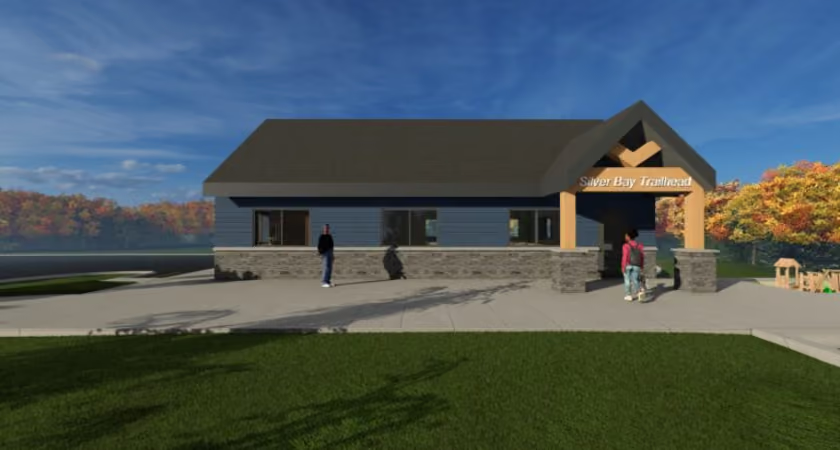
Located on Outer Drive, the 3,500-square-foot building was designed by DSGW Architecture and serves multiple user groups, including cyclists, pedestrians, ATV riders, and side-by-side vehicle enthusiasts. The project also includes expanded trail connections and dedicated parking areas intended to improve access and visitor convenience.
Communities across the Midwest continue investing in outdoor recreation assets as a strategy to attract tourism, improve quality of life, and stimulate local economic activity. Trail systems have become increasingly important drivers of visitor spending, supporting businesses ranging from lodging and restaurants to retail and recreation services.
The Silver Bay project reflects this trend by creating a centralized facility where residents and visitors can access recreational amenities while connecting to multiple transportation and trail networks.
The building’s upper level includes a community room, kitchen, and restroom facilities that can be used for local events, meetings, and public gatherings. On the lower level, visitors have access to park storage space and public restrooms available around the clock.
The development enhances accessibility to outdoor destinations by bringing together several trail types at a single location. By accommodating a variety of recreational users, the facility is positioned to serve as a regional hub for both organized events and everyday trail use.
Municipalities increasingly view these types of investments as long-term assets that support tourism development while providing recreational opportunities for residents.
The inclusion of multiple parking areas and trail connections also helps improve visitor circulation and reduce congestion at other access points throughout the region.
Public-sector owners continue pursuing projects that combine recreation, tourism, and community-use functions into a single facility. These investments often generate broader economic benefits by encouraging visitation while providing flexible spaces that can be used by local organizations and residents.
For contractors and designers, trailhead facilities have become a growing segment of civic construction, requiring coordination between transportation infrastructure, public amenities, accessibility requirements, and environmental considerations.
The Silver Bay trailhead center demonstrates how relatively modest public investments can support multiple community objectives, including tourism growth, recreation access, and civic engagement.
For municipal owners, integrating community gathering spaces with recreation infrastructure can maximize facility utilization while creating long-term value for residents and visitors. As outdoor recreation continues to be an economic driver for many communities, similar projects may become an increasingly important component of local development strategies.
Originally reported by Kraus-Anderson.