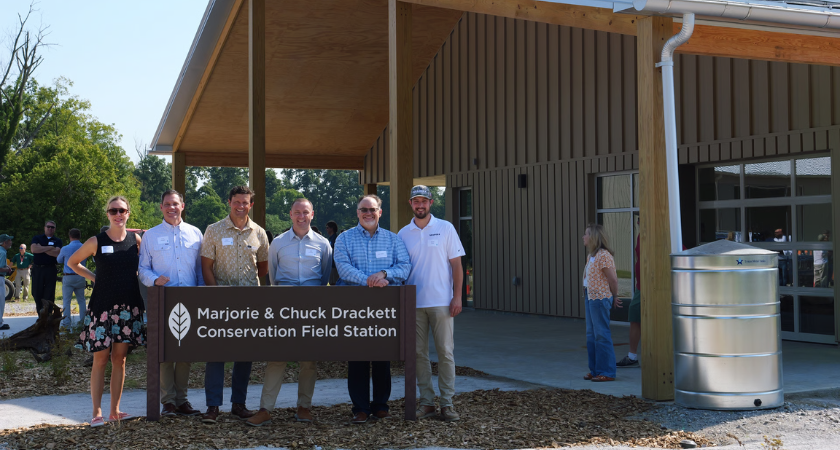
Expanding specialized environmental facilities can give researchers, land managers and conservation organizations space to coordinate field research and restoration programs. A new 4,000-square-foot conservation field station at the Cincinnati Nature Center’s Long Branch location in Goshen, Ohio, is now supporting those activities, with Skanska serving as construction manager.
The Marjorie & Chuck Drackett Conservation Field Station was developed to support conservation research, native plant production and habitat restoration activities. The facility also provides space for collaboration among landowners, ecologists, researchers and natural resource professionals.
The building includes a native seed processing barn and climate-controlled seed storage barn, along with laboratory workstations and equipment areas. Additional components include plant cultivation hoop houses, meeting and office spaces and restrooms.
The field station is intended to support ecological research conducted with academic and conservation partners throughout the region.
Cincinnati Nature Center engaged Emersion Design LLC for the design and Skanska for construction management.
The facility was formally opened during a ribbon-cutting ceremony Sept. 1 at the Long Branch location. The project provides dedicated infrastructure for conservation programs that combine research, plant production and practical land-management activities.
The field station also expands the organization's physical capacity for native seed banking and plant cultivation, creating additional space for conservation-related programs and visiting researchers.
For owners developing specialized institutional and environmental facilities, the project demonstrates how relatively compact buildings can combine laboratory, storage, production and collaborative functions within one campus.
The facility also reflects continued investment in infrastructure supporting environmental research, habitat restoration and resource management. Its combination of controlled storage, laboratory space and outdoor cultivation areas is designed around the operational requirements of conservation programs rather than conventional office or educational use.
Source: Skanska.