Texas Wesleyan University is exploring ways to strengthen transportation connections between two major eastside roads in Fort Worth as construction and campus development accelerate.
.jpg)
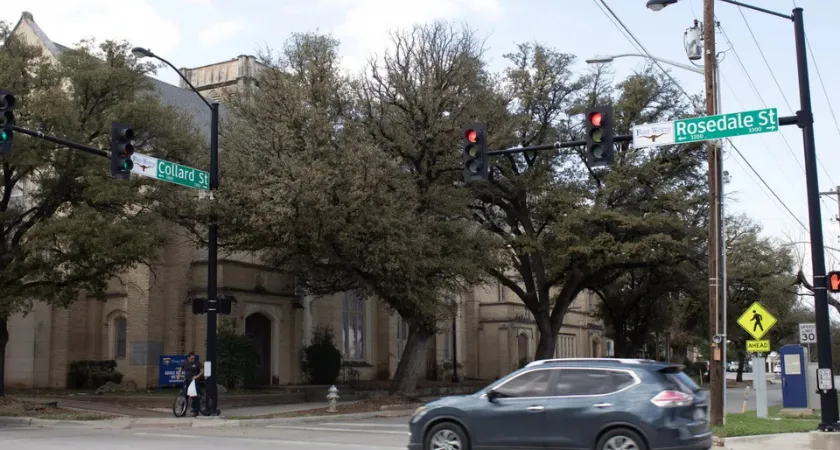
The university, a central institution in the Polytechnic Heights neighborhood, is evaluating improvements along Collard Street to better connect East Lancaster Avenue and East Rosedale Street. The effort comes as Texas Wesleyan continues investing in campus growth, including the construction of a new football stadium and other athletic facilities.
The project gained momentum after the Regional Transportation Council approved $150,000 in funding on March 12 to study current conditions along Collard Street and develop an initial funding strategy for potential road upgrades.
As part of the study, students will participate in several aspects of the project, including conducting corridor audits, creating surveys and helping develop branding and marketing materials. Officials expect the study to be completed by December.
University officials said the study will examine safety issues, streetscape improvements and transportation upgrades that could strengthen the corridor connecting Collard Street with East Lancaster Avenue and East Rosedale Street.
The initiative builds on substantial investment in the surrounding transportation network. Over the past two decades, the transportation council has allocated $250 million toward improvements along Rosedale Street, reflecting the long-term focus on improving infrastructure in the area.
Texas Wesleyan spokesperson Karen Cantrell said the university hopes the project will support broader revitalization efforts across the neighborhood.
“Its purpose is to identify opportunities for revitalization, development, placemaking and community engagement while ensuring future growth reflects the priorities of residents, businesses and local partners,” she said. “Texas Wesleyan University’s presence along the corridor brings important momentum to these efforts, as our university is the economic development anchor in this area.”
Dwala Chandler, manager of the Poly Main Street program, is overseeing the road project as part of the broader redevelopment effort.
University officials believe improving Collard Street will create an important north-south corridor connecting two key eastside routes while helping position the campus as a hub of economic and community activity.
Both East Lancaster Avenue and East Rosedale Street have already received significant infrastructure funding in recent years. For example, Lancaster Avenue alone has seen about $182 million in upgrades, with several bus stops located near Collard Street and others positioned directly in front of the university along Rosedale.
The Collard Street project would also integrate improvements planned for nearby Vaughn Boulevard as part of local beautification initiatives.
After the initial study phase concludes, staff from the North Central Texas Council of Governments will collaborate with engineers to conduct a feasibility analysis and develop conceptual designs for Collard Street improvements. That work is expected to continue through December 2027, with a funding strategy for the corridor anticipated by December 2028.
Cantrell emphasized that the university’s role in the project reflects its broader commitment to supporting the surrounding community.
“Through this collaboration, Texas Wesleyan continues to play a key role as a community partner and anchor institution in east Fort Worth, working alongside neighborhood leaders to strengthen economic opportunity and neighborhood vitality,” Cantrell said.
The timing of the transportation planning effort coincides with several major developments on campus. Texas Wesleyan is preparing to celebrate its 135th anniversary, while enrollment has grown 8% since last spring, according to university officials.
The road improvements are also expected to support increased campus activity as Texas Wesleyan works to expand its football program and move it to NCAA Division II.
.webp)
The university is currently constructing Karen Cramer Stadium, located near Rosedale and Binkley Street, which is scheduled to open in 2027.
Events at the stadium could draw large crowds, including many of the university’s 27,000 alumni who live within 50 miles of campus.
“We are in the process of creating a game-day fan experience with our newly opened Moritz Fieldhouse, Lou Baker Martin Alumni House, Karen Cramer Stadium all tied together,” Cantrell said.
Since 2020, Texas Wesleyan has invested more than $37 million in athletic facilities and program improvements.
University officials say the institution plays a major role in the region’s economy. With roughly 835 employees, Texas Wesleyan generates a regional economic impact of $244 million, representing a 64% increase since 2023.
Cantrell said improving transportation access around campus could also encourage further business development in the surrounding neighborhood.
“Working to revitalize and strengthen the area will provide opportunities for more businesses to come and serve the area, our students, faculty and staff,” Cantrell said.
Originally reported by Eric E. Garcia in Fort Worth Report.



.png)