.jpg)
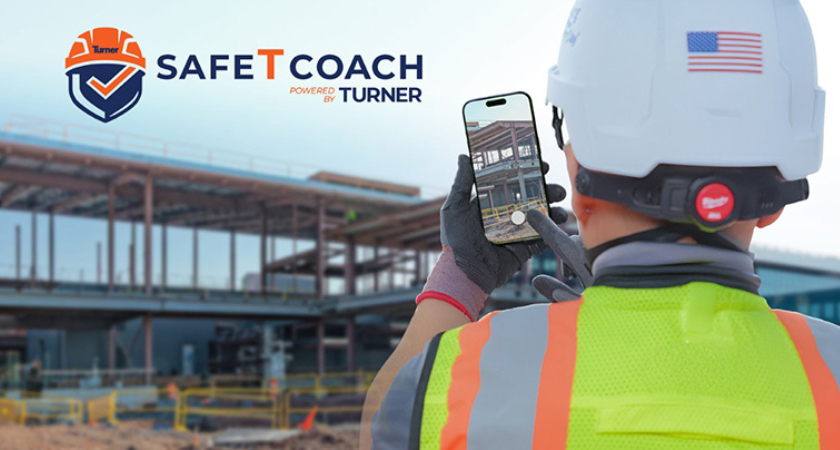
A major construction technology shift is underway as Turner expands access to its AI-powered safety platform, SafeT Coach, making it available to contractors and field teams across the broader construction industry.
The system represents a growing category of digital jobsite tools designed to deliver immediate safety guidance directly at the point of work. Instead of relying solely on traditional manuals, scheduled training, or post-incident reporting, the platform provides real-time support intended to help field teams recognize and manage hazards as conditions change.
For construction owners and contractors, the move reflects a broader industry transition toward data-driven, on-demand safety decision support tools embedded directly into field operations.
SafeT Coach is designed for use on mobile devices in active jobsite environments, allowing workers and supervisors to request guidance using natural language or uploaded images.
The platform evaluates inputs and provides hazard-focused feedback, including potential risk identification and suggested mitigation steps. The intent is not enforcement, but decision support—helping field personnel assess conditions and apply appropriate controls in real time.
Unlike general-purpose AI tools, the system is built on internal construction safety standards, ensuring responses are aligned with established jobsite protocols and risk management frameworks.
Before public release, the system was tested through multiple field pilots involving a range of construction stakeholders, including supervisors, safety managers, and craft personnel.
During early deployment, the platform logged tens of thousands of interactions across jobsite environments. Use cases reported during testing included:
These applications suggest the tool is being used not only for hazard identification, but also for administrative and communication support functions within safety operations.
The introduction of AI-assisted safety tools highlights a broader movement in construction toward predictive and real-time risk management systems.
Rather than relying exclusively on retrospective incident analysis, contractors are increasingly adopting tools that aim to identify risks before incidents occur. This shift aligns with growing emphasis on leading indicators, behavioral safety observation, and proactive hazard mitigation.
For large contractors managing complex, multi-employer jobsites, such systems also support consistency in safety interpretation across multiple teams and subcontractors.
The broader availability of AI-based safety tools introduces several operational considerations for the construction sector:
1. Safety decision-making is becoming more technology-assisted
Field teams are gaining access to instant guidance tools that reduce reliance on delayed administrative processes.
2. Standardization of safety interpretation is increasing
Digital systems may help align hazard recognition and response across diverse subcontractor networks.
3. Data-driven safety programs are expanding
Interaction data from field tools can provide insight into recurring jobsite risk patterns.
4. Supervisor roles are evolving toward coaching functions
Technology is increasingly positioned as a support layer rather than a replacement for field leadership judgment.
5. Safety programs are becoming more integrated with digital workflows
Mobile-first tools are embedding safety checks directly into daily construction operations.
Originally reported by Turner Construction.