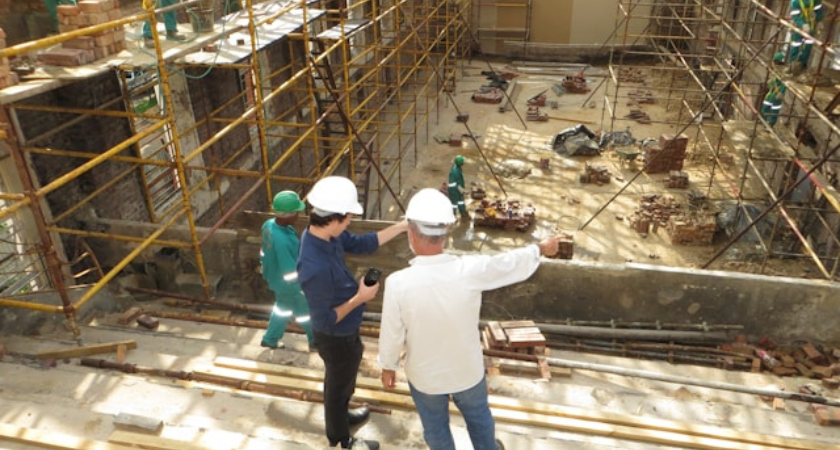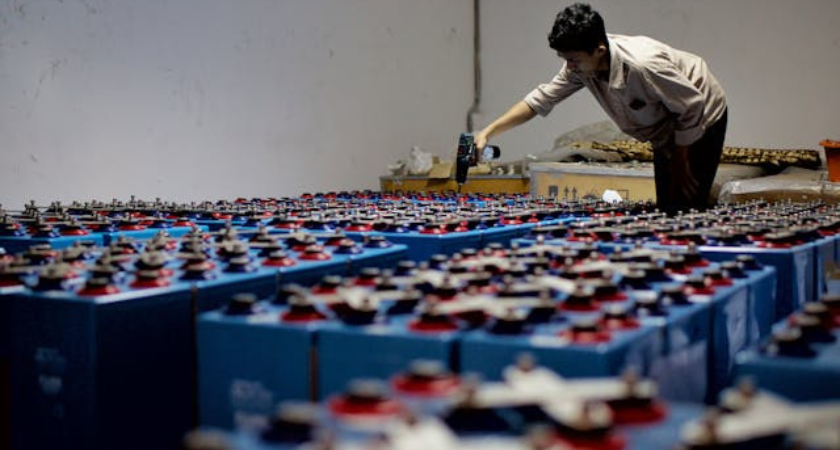
Battery manufacturing construction activity across the United States has reached unprecedented levels, with approximately $45 billion worth of projects currently under construction as automakers and energy companies pivot toward energy-storage technology.
According to new data released by Industrial Info Resources (IIR), the U.S. has roughly $63 billion in active and planned battery-manufacturing projects underway, with the majority of spending tied to facilities already being built.
The construction boom reflects a significant shift in strategy among automotive manufacturers and battery suppliers as demand growth for fully electric vehicles slows and companies increasingly focus on battery energy storage systems, or BESS.
“Rollbacks on energy transition funding — including the expiration of the federal $7,500 consumer EV tax credit — and slower-than-expected market adoption — are leading domestic automakers to shift production from full EVs, leaving some U.S. battery-manufacturing capacity underutilized,” the report stated.
Industry analysts say the transition is also being fueled by growing electricity demand from data centers and renewable energy infrastructure.
Major automakers including Ford and General Motors are investing billions to convert or expand facilities capable of producing lithium-iron-phosphate batteries for energy-storage applications.
Ford recently launched its new Ford Energy division and is investing approximately $2 billion to convert a former EV battery plant in Glendale, Kentucky, into a commercial BESS manufacturing facility. The plant is expected to produce at least 20 gigawatt-hours annually and begin operations in 2027.
Another Ford battery project under construction in Marshall, Michigan, is expected to begin production later this year and will focus on smaller residential battery units.
General Motors and Samsung SDI are also constructing a $3.5 billion battery facility in Indiana designed to support both EV and energy-storage battery production. Construction is expected to conclude by the end of 2027.
Meanwhile, GM’s Ultium Cells joint venture with LG Energy Solution is retooling its Spring Hill, Tennessee, facility to shift manufacturing toward lithium-iron-phosphate battery cells for energy storage.
Battery-storage technology is becoming increasingly important for utilities and data centers seeking alternatives to diesel-powered backup systems during grid disruptions.
Battery manufacturers and suppliers are continuing to invest heavily in U.S. production capacity tied to Tesla and hybrid vehicle demand.
LG Energy Solution recently signed a deal to provide Tesla with $4.3 billion worth of lithium-iron-phosphate battery cells from its Lansing, Michigan, facility for use in energy-storage systems. The agreement is driving plans for a multibillion-dollar retooling and expansion of the plant.
Panasonic is also moving forward with a $4 billion expansion of its De Soto, Kansas, facility near Kansas City to increase production of battery cells for Tesla electric vehicles. Full-scale production is expected to begin in 2027.
Toyota is simultaneously expanding battery production at its Liberty, North Carolina, campus, the company’s only battery plant outside Japan. The project includes a new building with two production lines and eight additional lines dedicated to plug-in hybrid vehicles.
Industrial Info Resources said the rapid expansion of battery manufacturing construction demonstrates how energy storage is becoming a critical component of the nation’s evolving power infrastructure and industrial economy.
The report also highlights how data center growth and grid reliability concerns are reshaping investment priorities across the automotive and manufacturing sectors.
Originally reported by Danny Levin, Deputy Editor for IIR News Intelligence (Sugar Land, Texas) in Industrial Info. Com.