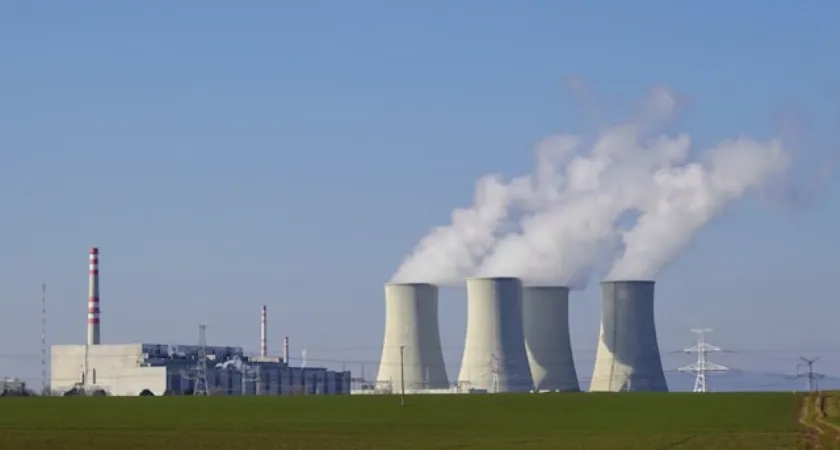
The United States has approved construction of a next-generation nuclear reactor backed by billionaire investor Bill Gates, marking a major step forward for advanced nuclear energy projects in the country.

The approval allows TerraPower to begin building its planned small modular nuclear reactor in Wyoming, representing the first construction authorization for a commercial nuclear reactor in the United States in nearly a decade.
The decision was issued by the U.S. Nuclear Regulatory Commission (NRC), clearing the way for the company’s innovative sodium-cooled Natrium reactor project.
The project involves construction of a 345-megawatt reactor in the town of Kemmerer, Wyoming, located in the western part of the state. The facility is expected to begin operating in the early 2030s.
The plant will run on high-assay low-enriched uranium, known as HALEU, which contains higher enrichment levels than traditional nuclear fuel used in existing U.S. reactors.
According to developers, the fuel will allow reactors to operate more efficiently and support advanced reactor designs.
The approval represents a significant milestone for the U.S. nuclear industry as policymakers seek new ways to expand clean energy generation and strengthen energy security.
TerraPower said construction could begin within weeks and that it plans to apply for an operating license from the NRC in late 2027 or early 2028.
The Natrium reactor system includes a built-in energy storage component that allows the facility to temporarily increase its electricity output.
While the reactor itself will generate around 345 megawatts of electricity, the integrated storage system will allow the plant to boost output to as much as 500 megawatts during periods of peak energy demand.
For comparison, most large conventional nuclear reactors in the United States generate around one gigawatt, or approximately 1,000 megawatts, of electricity.
Supporters say the Natrium design offers greater flexibility for modern power grids that increasingly rely on intermittent renewable energy sources such as wind and solar.
The approval comes amid a broader push by the administration of Donald Trump to expand nuclear power generation across the country.
The president has proposed increasing U.S. nuclear power capacity to roughly 400 gigawatts by 2050, a fourfold increase from current levels.
To help accelerate the development of new projects, the administration issued executive orders aimed at speeding up the federal permitting process for nuclear reactors, reducing review timelines that historically took several years.
In TerraPower’s case, the NRC completed its technical review of the reactor design in less than 18 months.
Small modular reactors, or SMRs, have gained increasing interest from governments and utilities seeking new low-carbon energy sources.
Backers say these reactors could eventually be manufactured in factories and assembled on site, which could reduce construction timelines and costs compared with traditional nuclear plants.
However, critics argue that smaller reactors may struggle to achieve the economies of scale that have historically supported larger nuclear facilities, potentially making them more expensive.
Despite these concerns, several governments and energy companies are continuing to invest in SMR technology as part of long-term strategies to meet rising electricity demand and reduce carbon emissions.
The Natrium reactor will rely on HALEU fuel, which is enriched to levels approaching 20%, significantly higher than the roughly 5% enrichment used in most existing nuclear reactors.
Historically, much of the world’s HALEU supply has been produced in Russia, prompting efforts by the United States to develop domestic production capacity.
Earlier this year, the U.S. Department of Energy awarded approximately $900 million each to American Centrifuge Operating, a subsidiary of Centrus Energy, and General Matter, a company backed by billionaire investor Peter Thiel, to help build a domestic supply chain for the specialized fuel.
Some nuclear non-proliferation experts have urged caution regarding HALEU production, recommending enrichment levels be limited to about 12% to reduce potential risks associated with nuclear materials.
The TerraPower project represents one of the most closely watched advanced nuclear developments in the United States.
If successful, it could help demonstrate the viability of next-generation reactor designs intended to provide reliable carbon-free electricity while complementing renewable energy sources.
Energy analysts say advanced nuclear technologies could play an increasingly important role as countries seek to meet climate goals while maintaining reliable power systems amid growing electricity demand.
The project also highlights the increasing role of private technology investors and partnerships between energy innovators and the construction sector in developing large-scale infrastructure projects.
Originally reported by Timothy Gardner in Reuters.