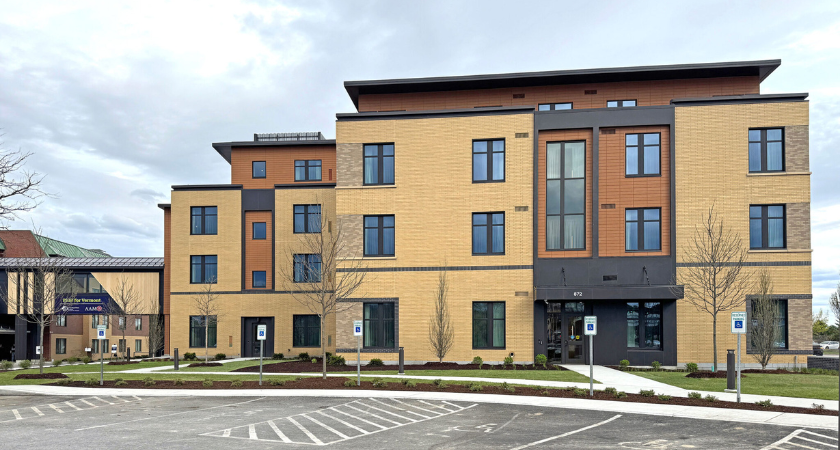
A newly completed hotel expansion in South Burlington, Vermont, is underscoring how hospitality owners are increasingly pairing capacity growth with sustainability-focused construction strategies as travel demand continues to rebound across regional markets.
.jpg)
The expansion at the DoubleTree by Hilton property adds approximately 47,000 square feet of new space to the hotel campus, including 66 guest rooms and four executive suites. The project also introduces a new sky bridge connection between the original structure and the new wing, improving operational flow and guest circulation across the property.
The development was completed through a collaboration involving contractor PC Construction, owner AAM 15 Management and design partner Smith Buckley Architects.
Project teams delivered the four-story addition while maintaining operations at the active hotel property, a growing challenge for contractors working on phased hospitality renovations and live-site expansions. Urban site constraints reportedly required closely timed material deliveries and extensive coordination with municipal agencies and transportation officials throughout construction.
Beyond adding room inventory, the project reflects a broader shift toward lower-carbon hospitality infrastructure and energy-efficient building systems.
The expansion incorporated all-electric heating and cooling technology through room-based heat pump systems, a design approach becoming more common as hotel owners seek to reduce long-term operating costs and improve energy performance. The project also included a 4,250-square-foot rooftop solar installation intended to offset a portion of the building’s power demand.
Stormwater infrastructure improvements were also integrated into the site design through new gravel wetland systems intended to improve runoff management and environmental performance.
For construction firms and developers, projects like this highlight the growing complexity of hospitality work, where owners increasingly expect sustainability upgrades, operational continuity and premium guest amenities to be delivered simultaneously within constrained construction schedules.
The completion also reflects continued investment in regional tourism infrastructure across secondary and mid-sized markets, where hotel owners are expanding existing properties rather than pursuing entirely new developments. That trend is creating opportunities for contractors specializing in occupied renovations, phased expansions and energy retrofits.
As labor availability, energy performance standards and operating costs continue shaping development decisions, hospitality owners are expected to place greater emphasis on resilient building systems and long-term efficiency gains in future lodging projects.
Hotel expansion projects are increasingly evolving into multi-objective developments that combine capacity growth, sustainability targets and operational modernization. Owners pursuing similar projects may face rising expectations around energy efficiency, electrification and stormwater compliance, while also needing contractors capable of managing construction on occupied sites.
For builders and developers, hospitality work continues to present opportunities in retrofit construction, phased delivery planning and sustainable systems integration as travel markets and tourism-related infrastructure investment remain active across the United States.
Originally reported by Olivia Costin, Project Manager in PC Construction.