A $1.06 billion rail modernization program in Boston is setting up one of the most complex transit infrastructure delivery challenges in the United States, as regional authorities move forward with a large-scale upgrade of the North Station rail corridor.
The program, led by Skanska on behalf of the Massachusetts Bay Transportation Authority (MBTA), focuses on replacing aging bridge infrastructure while simultaneously increasing rail capacity and modernizing control systems across a heavily trafficked commuter and intercity rail route.
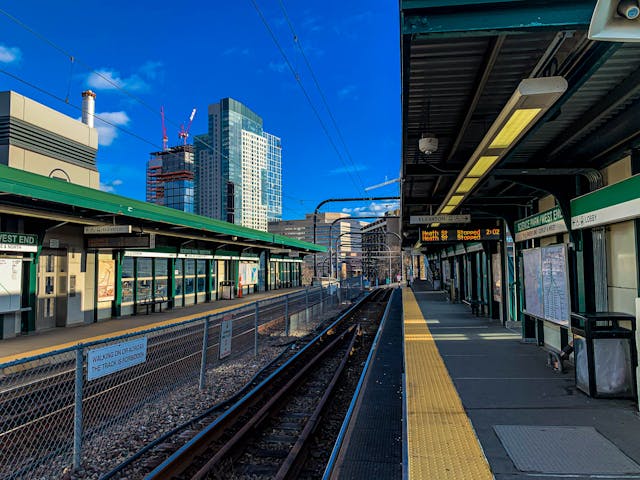
The project corridor supports millions of annual riders, making uninterrupted service a central constraint shaping construction sequencing and delivery strategy.
At the core of the project is the replacement of century-old bascule bridge structures spanning the Charles River with modern vertical lift spans designed to improve reliability and reduce operational bottlenecks.
In addition to bridge replacement, the program includes expansion from four to six tracks, upgrades to rail signaling systems, implementation of Positive Train Control, and construction of a new control facility and additional platform capacity at North Station.
Unlike traditional infrastructure replacement projects, this effort must maintain continuous commuter rail and Amtrak operations throughout construction, requiring tightly staged sequencing and extensive coordination between construction teams and rail operators.
The MBTA program reflects a broader shift in how major public transit agencies are structuring capital projects. The use of a design-build delivery model allows for earlier contractor involvement in sequencing, constructability planning, and systems integration — factors that are critical in active rail environments.
In projects of this scale, construction phasing is often as important as structural engineering. Limited track outages, constrained work windows, and operational dependencies require contractors to align closely with rail operators to minimize service disruption.
For large infrastructure programs, this approach is increasingly seen as a way to reduce schedule risk while managing complex stakeholder requirements.
Beyond structural replacement, the project incorporates a wide range of systems upgrades, including rail signaling, communications, and control infrastructure modernization. These elements must be integrated into an active transportation network without interrupting daily commuter flows.
The corridor’s constrained urban setting adds further complexity, requiring careful staging of materials, in-water construction coordination, and alignment with environmental permitting requirements.
Contractors are also expected to evaluate Alternative Technical Concepts aimed at reducing environmental impacts and improving construction efficiency, particularly in sensitive river and urban interfaces.
Across the United States, aging rail infrastructure is increasingly driving large-scale reinvestment programs focused not only on repair, but on capacity expansion and system resilience.
Transit agencies are under pressure to modernize assets built in the early to mid-20th century while maintaining uninterrupted service levels in densely populated urban corridors. This is pushing contractors toward more sophisticated delivery models that emphasize coordination, staging innovation, and real-time operational planning.
At the same time, demand for skilled labor in bridge construction, rail systems, and heavy civil work is intensifying competition across infrastructure sectors, particularly as federal funding supports long-term transit upgrades.
Additional details on the project and delivery scope are available through the contractor’s project announcement.
Skanska USA project information
For construction owners and public infrastructure agencies, the Boston rail program underscores a defining challenge in modern infrastructure delivery: rebuilding critical systems without taking them offline.
Projects of this nature require early integration between designers, contractors, and operators to manage operational continuity, minimize service disruption, and ensure phased handovers that maintain system reliability throughout construction.
As urban infrastructure ages, more programs will likely mirror this model — prioritizing phased modernization within live systems rather than full shutdown-and-rebuild approaches. Contractors and owners capable of managing that level of complexity will be increasingly essential to the success of large-scale public works programs.
Originally reported by Skanska.