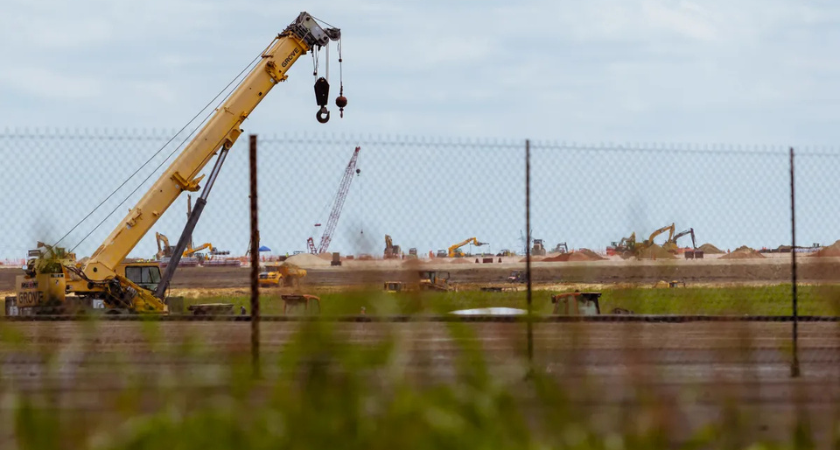
A joint venture between Messer Construction and Sundt Construction has officially broken ground on a major $900 million infrastructure project at Nashville International Airport, marking another milestone in the airport’s sweeping modernization efforts.
.webp)
According to a March 16 announcement from Sundt, the project centers on the development of a new consolidated rental car facility, commonly known as CONRAC, designed to streamline rental operations and improve the overall passenger experience.
The initiative is part of the airport’s broader $3 billion “New Horizons” capital improvement program, which aims to accommodate surging passenger volumes and modernize key infrastructure assets.
Under a progressive design-build approach, the Messer-Sundt JV will construct a large-scale, six-level facility that combines parking and rental car operations into a single integrated complex.
The structure will include a 3,000-space parking garage alongside a 4,700-vehicle rental car storage facility. In addition, a dedicated customer service building will support rental operations, making it easier for travelers to access services from companies such as Hertz and Enterprise in one centralized location.
Beyond the main facility, the project includes a series of infrastructure upgrades aimed at improving traffic flow and connectivity across the airport campus.
Plans call for the development of quick turnaround areas equipped with fueling and car wash systems, as well as new bridges and roadways linking Terminal Drive to the CONRAC complex. The redesign of the Terminal Drive loop road is expected to significantly increase roadway capacity while improving access to surrounding transportation networks.
Additionally, the project will incorporate infrastructure to support on-airport shuttle systems, ensuring efficient movement of passengers between terminals and rental car services.
The JV team will deliver the project in multiple phases, with full completion anticipated in 2029.
The CONRAC development represents a key component of the airport’s long-term New Horizons initiative, which has evolved into a multibillion-dollar effort to transform the facility.
Since launching in 2017, the airport has outlined a total development scope of approximately $4.5 billion through the program’s completion.
Several elements of the expansion have already been completed, including the $247 million Concourse D extension unveiled last July. That project added over 160,000 square feet of space and increased the airport’s gate count to 11, helping ease congestion and support future growth.
Other major upgrades currently in progress include the Central Ramp expansion, reconstruction of Concourse A and improvements to the airport’s baggage handling system, all scheduled for completion between 2027 and 2028.
Funding for the overall program comes from a mix of sources, including bonds, federal and state aviation grants and passenger facility charges, which add a fee to each flight segment.
.webp)
The Nashville project reflects a broader trend across the U.S., where airports are ramping up capital investments to meet rising travel demand. Major projects are underway in cities like Chicago, Miami and Pittsburgh, signaling sustained momentum in aviation infrastructure development nationwide.
As air travel continues to rebound and grow, airports are increasingly investing in large-scale infrastructure upgrades that prioritize efficiency, capacity and passenger convenience. Consolidated rental car facilities like CONRAC projects have become a common feature of modern airport design, helping reduce congestion, streamline operations and improve land use.
For contractors, these projects also highlight the growing role of design-build delivery methods in managing complex infrastructure programs. By integrating design and construction phases, teams can accelerate timelines while maintaining flexibility in execution.
Looking ahead, the success of Nashville’s New Horizons program could serve as a model for other mid-sized airports seeking to scale operations and modernize facilities without disrupting ongoing passenger activity.
Originally reported by Matthew Thibault, Reporter in Construction Dive.