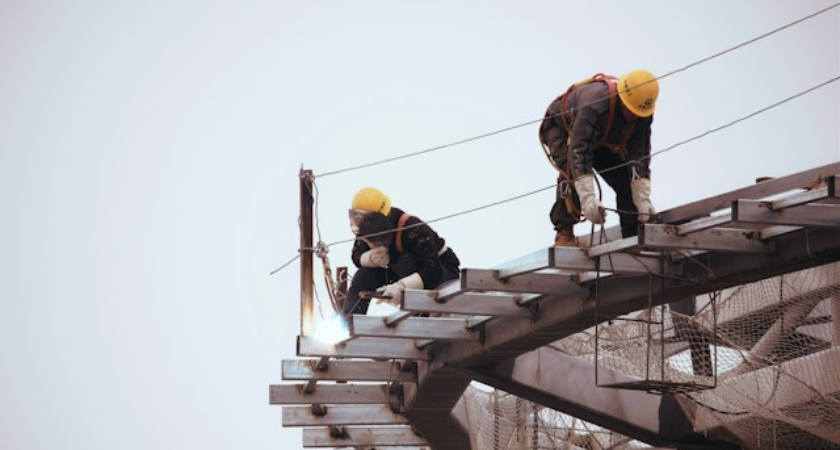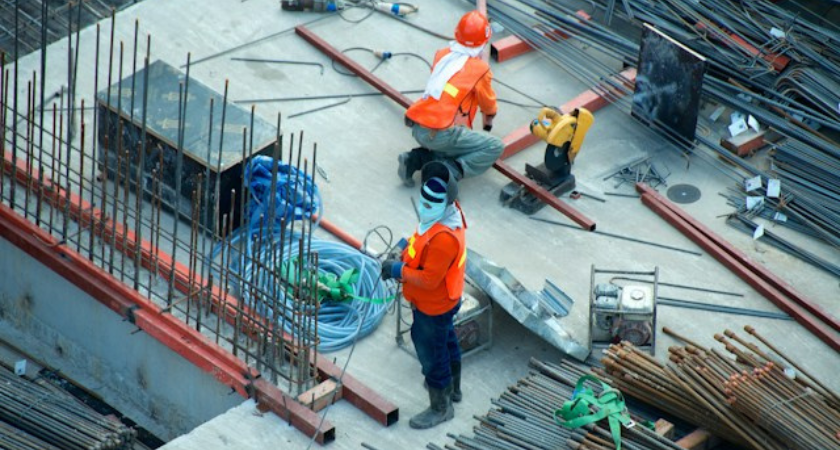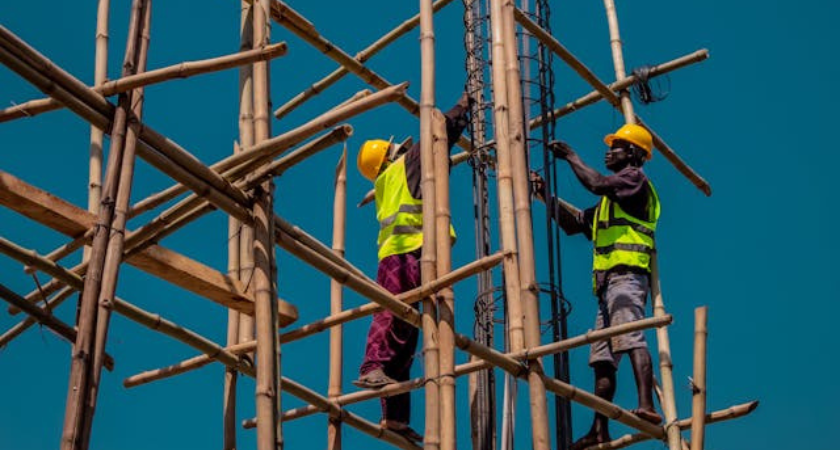
A decline in construction worker deaths across New York in 2024 may suggest progress on paper, but a deeper look at the latest NYCOSH “Deadly Skyline” report paints a far more troubling picture: Construction remains one of the state’s deadliest industries, and systemic weaknesses in oversight, enforcement and worker protection continue to expose thousands of workers to preventable harm.
The report, released in May, found that while fatalities decreased from recent highs, the broader safety ecosystem surrounding New York construction remains under significant strain. Reduced inspections, declining penalties, agency staffing shortages and persistent disparities among immigrant and non-union workers are combining to create what advocates describe as a structurally dangerous environment rather than an improving one.
New York State’s construction sector employed roughly 389,300 workers in 2024, yet 55 workers still died on the job. While that marks an improvement from 74 fatalities in 2023, the 10-year toll remains staggering: At least 587 construction workers have died statewide since 2015.
In New York City, fatalities dropped to 19 from 30 a year earlier, but the city’s construction fatality rate of 9.4 deaths per 100,000 workers still exceeded the statewide rate and remained dramatically higher than the citywide average across all industries.
For construction owners and contractors, the data reinforces a difficult reality: Even with some year-over-year improvement, project delivery in dense urban environments remains deeply tied to workforce safety performance.
Among the report’s starkest findings is NYCOSH’s analysis that 81% of OSHA-investigated construction deaths in New York in 2024 occurred on non-union sites.
While the report stops short of asserting causation, it argues that unionized environments often provide stronger training, more robust hazard reporting channels and greater institutional accountability.
For owners, developers and public agencies, this finding may intensify scrutiny around contractor prequalification, subcontractor oversight and safety governance — especially as large projects increasingly rely on multilayered subcontracting structures.
One of the report’s most consequential themes is that regulatory visibility has not kept pace with ongoing hazards.
OSHA inspections in New York totaled 3,162 in 2025, down from 4,455 in 2019. Meanwhile, average fines in construction fatality cases fell to $25,295 in 2024, the lowest since 2017.
At the same time, OSHA’s New York regional press releases — a key public accountability mechanism — dropped to just three in 2025.
This matters beyond compliance.
For construction owners, weaker enforcement can create uneven market conditions where responsible contractors investing in safety may compete against firms operating with lower accountability exposure.
NYCOSH reported that in 77% of fatality investigations reviewed, employers were cited for OSHA violations connected to the death incident.
This suggests that many fatalities were not isolated accidents but failures linked to identifiable safety lapses such as inadequate fall protection or missing training.
For owners and public-sector project sponsors, the report raises a broader procurement issue: Contractors with serious violations may still remain eligible for public subsidies or government-supported work.
That dynamic could intensify calls for expanded responsible contractor policies and stricter safety-based qualification standards.
The report also highlights four New York construction fatalities in 2024 that occurred during temperatures above 80 degrees Fahrenheit, reinforcing that heat-related hazards are becoming a more prominent occupational safety issue.
As summer heat intensifies, owners and contractors may increasingly face pressure to integrate:
This adds another layer of operational complexity at a time when compressed schedules already strain workforce conditions.
Latino workers represented 25.8% of worker fatalities despite making up 18.6% of New York’s workforce, according to the report.
NYCOSH links this disparity to language barriers, uneven access to safety resources, retaliation fears and broader vulnerabilities affecting immigrant labor.
For construction leaders, this finding reinforces the importance of multilingual training, inclusive safety communication and stronger anti-retaliation protections.
For owners, developers and institutional capital planners, “Deadly Skyline” is not simply a worker safety report — it is also a project risk report.
Safety failures increasingly intersect with:
As New York’s construction market grows more complex, owners may need to move beyond viewing safety as a contractor-only issue and instead treat it as a core governance and delivery variable.
New York’s construction fatality numbers improved in 2024, but the NYCOSH report argues that the industry’s deeper structural risks remain unresolved.
Lower deaths do not necessarily equal a safer system.
Until enforcement strengthens, accountability expands and worker protections become more consistent across all job sites, New York’s skyline may continue to rise on a foundation where too many risks remain both known and preventable.
Originally reported by NYCOSH.