A legal challenge to California’s school construction funding system could disrupt billions of dollars in campus modernization work as equity advocates push to temporarily halt state funding approvals for school facility projects.
Plaintiffs in Rodriguez v. State of California are seeking a preliminary injunction that would suspend the distribution of more than $3 billion in school modernization bond funding while the courts consider claims that the current allocation process unfairly advantages property-wealthy school districts.

The lawsuit, filed on behalf of parents, students, teachers, and community organizations from lower-wealth districts, argues that the state’s matching-fund system perpetuates unequal access to safe and modern educational facilities. The plaintiffs contend that districts with stronger tax bases and larger administrative resources are better positioned to secure state construction funding quickly, while lower-income districts struggle to compete for limited dollars.
If approved, the injunction would temporarily prevent state agencies from processing hundreds of pending applications tied to modernization and repair projects across California. The legal action targets approximately $3.2 billion from Proposition 2, a $10 billion statewide school facilities bond approved by voters in 2024.
The case has significant implications for contractors, construction managers, architects, and school districts relying on state participation to advance campus upgrades. Delays in bond allocations could slow procurement activity and postpone work involving classroom renovations, HVAC upgrades, roofing systems, electrical modernization, and safety improvements.
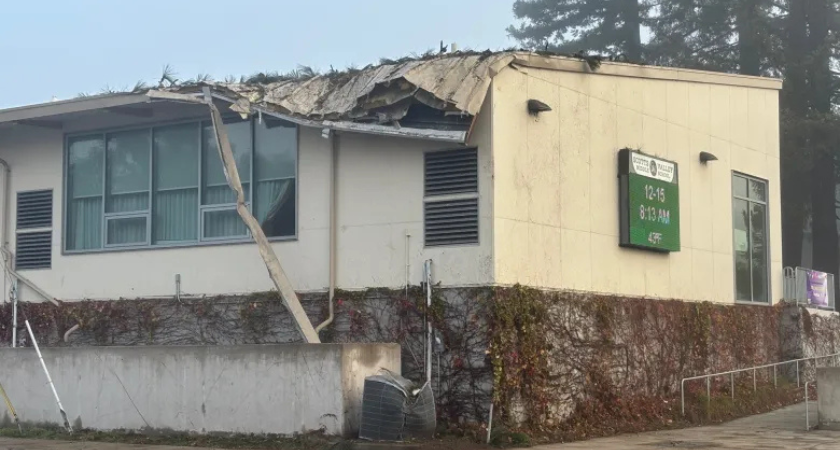
Plaintiffs argue that deteriorating facilities in lower-wealth districts continue to create operational and educational challenges, including aging infrastructure, failing utility systems, water intrusion, and outdated climate-control equipment. The lawsuit maintains that these conditions disproportionately affect students in rural and economically disadvantaged communities.
State officials oppose the injunction, arguing that freezing the funding pipeline would create immediate disruptions for districts preparing to move projects into construction phases. Attorneys representing state agencies said many districts are already counting on approved modernization assistance to maintain project schedules and financing commitments.
The broader dispute reflects longstanding tensions surrounding California’s school facilities funding structure. While operational funding for schools is distributed using formulas designed to support higher-needs students, construction and modernization projects remain heavily dependent on local bonding capacity and property tax wealth.
Industry analysts note that school modernization remains one of California’s largest public-sector construction markets, with districts facing mounting pressure to replace aging infrastructure, improve energy efficiency, and address deferred maintenance.
The outcome of the case could influence how future statewide school bonds are structured and distributed. It also may increase pressure on policymakers to revise funding formulas to account for disparities in local tax capacity and district access to capital.
For construction owners and public-sector contractors, the lawsuit introduces additional uncertainty into California’s education construction pipeline at a time when many districts are attempting to accelerate modernization efforts amid rising labor and material costs.
A court ruling on the preliminary injunction request is expected in the coming weeks.
Originally reported by John Fensterwald, EdSource in The Mendocino Voice.