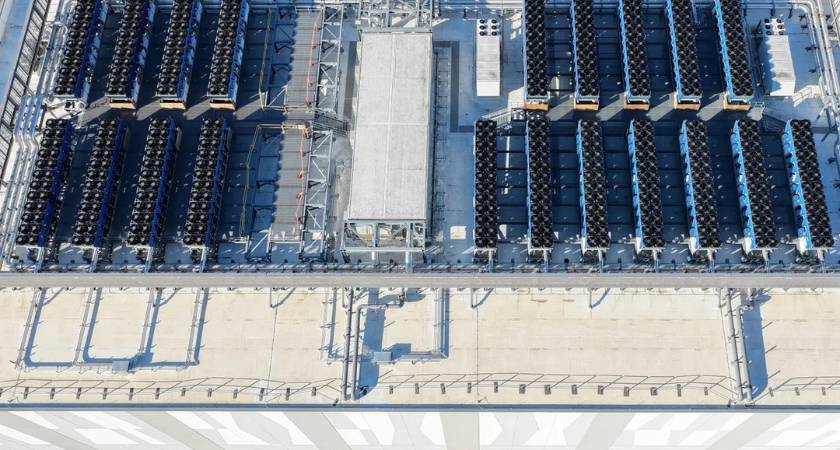
The U.S. construction industry’s economic outlook is becoming increasingly uncertain in 2026, with growth heavily concentrated in one segment — data center construction — while most other sectors show signs of slowing.
.jpg)
Recent economic data indicates that while overall backlog and project starts have improved, those gains are largely driven by continued investment in data centers tied to the artificial intelligence boom. Outside of that niche, planning activity has declined and hiring among construction firms has slowed.
Economists say the imbalance highlights a fragile industry outlook.
“This is a sign of a slowdown,” said Adam Raimond, program manager for cost indices at Gordian. “The fact that most of the growth is coming off of only data center construction is a sign that the industry is in a fragile position.”
Contractors involved in data center construction are benefiting from significantly stronger backlogs than their peers. According to Moody’s, these firms have about four months more backlog, giving them a buffer against rising costs and economic uncertainty.
“I know a lot of you out there with data center work are concerned that this boom is going to end, and it probably will end at some point. But not now,” said Anirban Basu, chief economist at Associated Builders and Contractors.
Data center development continues to anchor construction activity across planning, groundbreaking and backlog metrics, according to Ermengarde Jabir, director of economic research at Moody’s.
“Broadly, data center development, in all of its phases, is the main driver behind any observed overall improvements in construction metrics, whether looking at planning, groundbreaking or backlogs,” said Jabir. “Those contractors have more existing contracts for work and are better able to plan around construction cost considerations over a longer horizon.”
At the same time, construction input prices remain elevated. Costs rose at a 12.6% annualized rate during the first two months of 2026, nearing peak levels last seen in mid-2022.
“Increases in raw material costs and transportation costs will likely continue to drive cost inflation for construction projects,” said Juan Arias, national director of U.S. industrial analytics at CoStar. “Data center construction costs are also likely to continue rising as electrical components become harder to find.”
Despite these pressures, spending on artificial intelligence infrastructure continues to surge. Basu noted that hyperscalers invested roughly $450 billion in AI infrastructure last year, with projections reaching as high as $700 billion to $725 billion in 2026.
Outside of data centers, the outlook is far less optimistic. Traditional commercial construction sectors such as office and retail remain subdued, while multifamily and logistics development have seen declining demand and reduced investor interest.
“We continue to see a moderation in construction starts across all major property types as of the latest quarter,” said Arias. “This is driven by a pullback in developer interest as demand and rent gains have waned, particularly for multifamily and logistics properties.”
Industrial construction has also slowed significantly, with growth concentrated almost entirely in specialized segments such as data centers. This shift has contributed to an overall decline in construction pipelines, with total square footage under construction falling back to levels last seen in 2016, according to CoStar data.
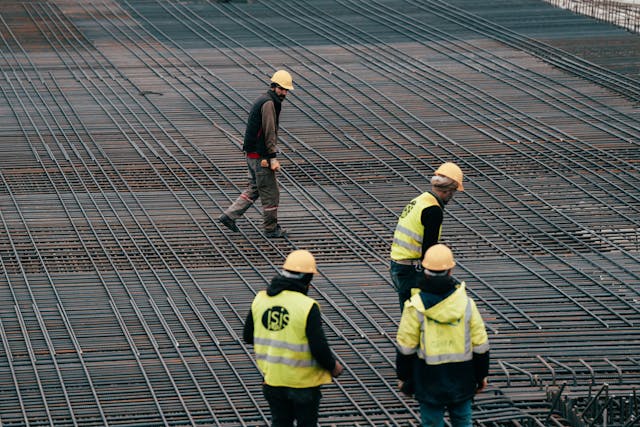
Jabir said the broader construction landscape remains highly dependent on geography and local economic conditions.
“Whether examining nonresidential construction or multifamily construction, the outlook is quite muted at the moment and very geographically dependent,” said Jabir. “Only modest new completions are expected for office and retail, primarily centered on employment and population hubs with growth prospects or established employment centers.”
Trade policy uncertainty and ongoing cost pressures continue to weigh on project planning and execution. While economists expect some stabilization in 2026, they caution that the current surge in data center construction is unlikely to sustain its rapid pace indefinitely.
“Across all sectors, 2026 will herald more of a stabilization in construction, and normalizing conditions will help mitigate some of the pressures contractors have faced from elevated labor and materials costs,” said Jabir. “While steady growth of data center usage is expected over both the short and long terms, the boom period of exponential growth to data center expansion is neither sustainable nor long-lived.”
Originally reported by Sebastian Obando, Reporter in Construction Dive.
.png)


.png)