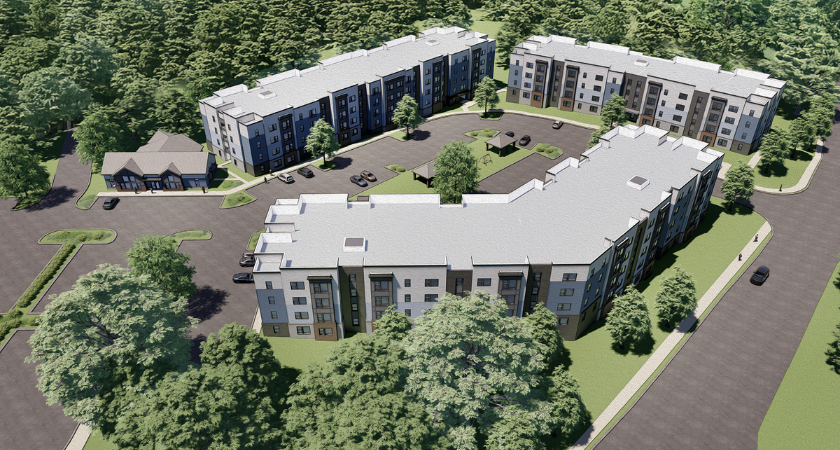
Affordable housing investment continues to be a priority for rapidly growing metropolitan areas, and a newly financed development in Raleigh aims to expand the supply of income-restricted housing while advancing transit-oriented growth. Gilbane Development is partnering with Harmony Housing Affordable Development and F7 International Development to deliver the Chapanoke community, a 200-unit residential project designed to serve a range of lower-income households in Wake County.
The Chapanoke development will be constructed on a former publicly owned site at 326 Chapanoke Road in Raleigh through Raleigh Community Partners LLC, the joint venture formed by the three development organizations.
The community will offer one-, two-, and three-bedroom apartments targeted to households earning between 30% and 70% of the Area Median Income. In addition to residential units, the project includes resident amenities intended to support long-term community living.
The location places future residents near Wake Technical Community College's Public Safety Education Campus and the planned Southern Wake Bus Rapid Transit corridor, providing access to education, workforce training, employment opportunities, and future public transportation.
Construction is expected to conclude in early 2028.
The total development investment is valued at nearly $93 million and combines multiple public and private funding sources.
Project financing includes Low-Income Housing Tax Credit equity provided by Greystone Real Estate Capital, construction and permanent financing from Greystone Housing Impact Investors LP and Citi Community Capital, along with subordinate loans from Wake County and the City of Raleigh.
Wake County also contributed the project site and approximately $7.1 million in gap financing to support the development.
The partnership is intended to transform publicly owned land into long-term affordable housing while supporting local housing affordability goals in one of North Carolina's fastest-growing regions.
Construction owners, developers, and affordable housing stakeholders continue to monitor financing models that combine public investment with private capital to address housing shortages. The Chapanoke project demonstrates how local governments, private developers, lenders, and tax credit investors can work together to advance large-scale affordable housing developments.
As population growth increases housing demand across Wake County, projects that integrate residential development with educational facilities and planned transit infrastructure may provide a framework for future public-private developments in other high-growth markets.
Source: Gilbane.