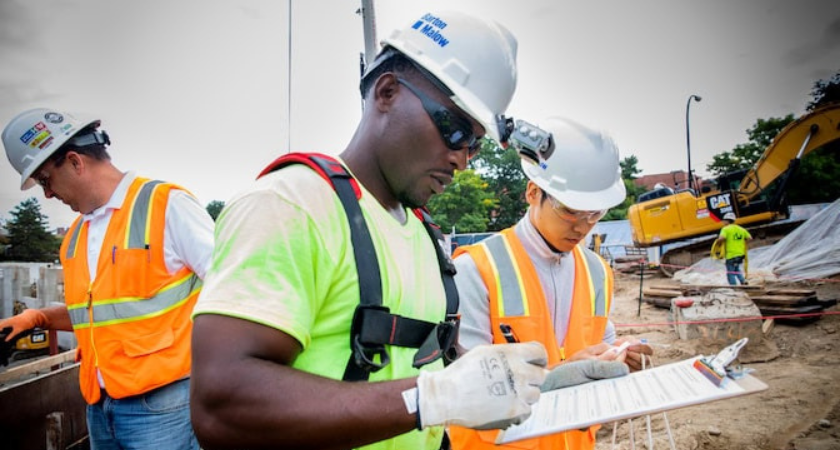
As construction firms across the United States continue to struggle with workforce shortages and increasingly complex project demands, the University of Michigan is expanding its graduate education offerings with a new online master’s degree focused on construction engineering and management.
The program, offered through the university’s Tishman Construction Management Program within the Civil and Environmental Engineering Department, is scheduled to welcome its first online cohort in Fall 2026. University officials said the initiative is aimed at helping fill growing gaps in construction leadership, project management and technical expertise across the built environment sector.
.jpg)
The launch comes at a time when contractors and developers are facing mounting pressure from labor shortages, infrastructure expansion and rapid technological change. According to recent industry workforce surveys, construction firms continue reporting difficulty filling supervisory and project management positions, particularly as experienced professionals retire from the industry.
Industry leaders say the problem extends beyond craft labor shortages. Construction firms are also struggling to replace institutional knowledge tied to project execution, scheduling, coordination and field management.
The online degree is designed to provide flexible access to graduate-level construction education for both early-career professionals and experienced workers seeking leadership advancement. Full-time students can complete the 26-credit program in as little as eight months, while part-time students have up to five years to finish coursework.
The curriculum focuses heavily on operational and technical construction management skills that are becoming increasingly important as projects grow more digitized and schedule-sensitive. Courses include construction cost engineering, project planning and control, building information modeling, construction professional practice and sustainability-focused infrastructure management.
University faculty involved in the program said the industry’s changing demands are reshaping how construction professionals must be trained. Beyond traditional project delivery, firms are now navigating AI integration, smart building technologies, data-driven project controls and increasingly sophisticated coordination requirements across design and construction teams.
Construction executives say those trends are particularly important as owners place greater emphasis on schedule certainty, operational efficiency and lifecycle asset performance.
The university is also positioning the online format to serve a broader international audience. Faculty noted that many rapidly developing global markets continue to expand infrastructure investment without having extensive graduate-level construction management education programs available locally.
To increase accessibility, the program includes a stackable online certificate option that allows students to complete credits before formally entering the master’s degree track. Those credits can later apply toward the graduate program, potentially lowering overall tuition costs and reducing barriers for working professionals.
For construction owners and contractors, the expansion of online graduate education may help improve the long-term pipeline of project managers, estimators, schedulers and construction technology specialists entering the industry. As projects become larger and more technically demanding, firms are increasingly prioritizing leadership development alongside craft workforce recruitment.
The announcement also reflects a broader shift occurring across the construction sector, where universities and employers are working more closely to modernize workforce development strategies around digital construction, AI-enabled project delivery and integrated infrastructure management.
Click here to apply!
For construction owners and developers, the expansion of online construction engineering education could help ease long-term leadership shortages that continue to impact project delivery timelines and operational efficiency.
Owners are increasingly facing challenges tied to inexperienced project management teams, delayed coordination and workforce turnover. Programs focused on construction technology, scheduling, BIM and cost engineering may help create a stronger pipeline of professionals capable of managing complex infrastructure and vertical construction projects.
The move also signals how construction education itself is evolving alongside the industry’s digital transformation. As AI, prefabrication, data analytics and integrated project delivery gain traction, owners may increasingly favor contractors with advanced technical management capabilities and formally trained leadership teams.
Originally reported by Jim Lynch in Michigan Engineering.