Investment in rehabilitation-focused healthcare facilities continues to create opportunities for contractors and healthcare developers as demand for specialized patient care environments expands across the United States.
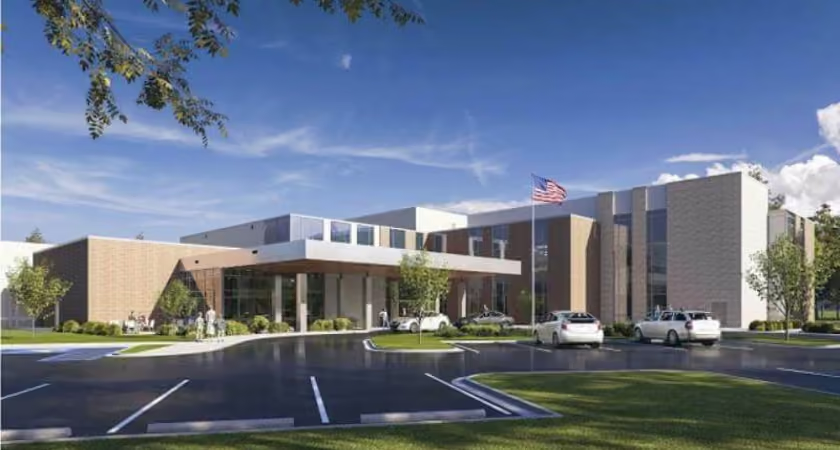
Construction is underway on a new inpatient rehabilitation hospital in Ooltewah, Tennessee, a community located near Chattanooga. The 54,000-square-foot facility is being developed by The Sanders Trust, with Lifepoint Health serving as owner and CommonSpirit participating as a healthcare partner. The hospital is expected to begin serving patients in spring 2027.
The project is designed to provide intensive rehabilitation services for patients recovering from serious injuries, illnesses, and neurological conditions. Plans call for 40 inpatient beds, including a dedicated unit for patients requiring brain injury rehabilitation services.
In addition to clinical care spaces, the facility will feature amenities intended to support patient recovery and independence. Planned elements include therapy gyms, an activities-of-daily-living training suite, outdoor recreational areas, and gathering spaces for patients, visitors, and staff.
From a construction perspective, the project demonstrates the increasing role of digital technologies in healthcare project delivery. Project teams are utilizing building information modeling and AI-enabled site documentation tools to improve coordination, track progress, and support decision-making throughout construction.
The development also presents unique site challenges. Because the project is located on land with wetland characteristics, significant site preparation and earthwork activities are required before vertical construction can proceed. Such conditions often demand extensive planning, environmental coordination, and schedule management to maintain project timelines.
Healthcare construction remains one of the most active sectors for contractors as providers continue expanding outpatient, rehabilitation, behavioral health, and specialty care services. Aging populations, increasing demand for post-acute care, and the need for modern treatment environments are driving new capital investments across many regional healthcare markets.
For owners and developers, the project illustrates how specialized healthcare facilities are becoming increasingly important components of regional healthcare networks. Facilities designed around rehabilitation and recovery require unique planning considerations, including patient-centered amenities, therapy-focused spaces, and advanced building systems.
The project also highlights the growing value of technology-enabled construction management. Digital coordination tools can help owners improve schedule visibility, reduce project risks, and enhance collaboration among design and construction teams, particularly on complex healthcare developments where operational requirements are highly specialized.
Source: Hoar Construction.