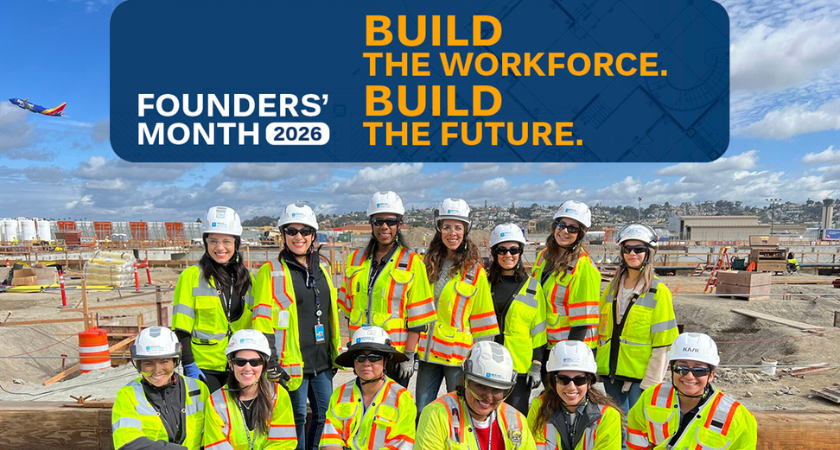
A major shift is underway in how large construction firms approach labor challenges, as workforce development becomes increasingly embedded in corporate strategy rather than treated as a standalone human resources function.
.jpg)
Turner Construction’s annual Founders’ Month initiative illustrates this evolution. Marking the company’s 124th year, the program mobilizes thousands of employees worldwide in community-based service and engagement activities, while placing renewed focus on skilled trades awareness and construction career pathways.
For construction owners and industry executives, the initiative reflects a broader trend: labor supply is no longer just a hiring concern, but a structural constraint shaping project delivery capacity.
The Founders’ Month program blends traditional volunteer efforts—such as local service projects and community improvements—with workforce-facing activities aimed at introducing construction careers to students, training programs, and community organizations.
This dual structure reflects a growing recognition among large contractors that workforce visibility and early career exposure can play a direct role in strengthening long-term hiring pipelines.
Rather than operating independently, community engagement efforts are increasingly being designed to support recruitment ecosystems and apprenticeship pathways that feed future project demand.
Persistent labor shortages across the construction industry continue to influence how contractors plan, bid, and execute work.
Skilled trades shortages—particularly in electrical, mechanical, and heavy civil disciplines—are affecting project scheduling and limiting how quickly firms can scale operations. This has implications across major construction sectors, including infrastructure expansion, data center development, healthcare facilities, and advanced manufacturing projects.
As a result, workforce availability is becoming a key determinant of bid competitiveness and execution reliability, particularly for large contractors managing multiple concurrent projects.
The integration of workforce development into corporate initiatives reflects a broader competitive shift within the construction industry.
Large contractors are increasingly leveraging education partnerships, community outreach, and training collaborations to strengthen visibility among prospective workers. These efforts serve a dual purpose: expanding the labor pipeline while reinforcing relationships within local markets where long-term project activity is expected.
In tight labor markets, these strategies can influence not only recruitment outcomes but also subcontractor stability and overall project delivery performance.
For project owners, workforce strategy is becoming an increasingly important factor in contractor evaluation and selection.
Beyond traditional considerations such as cost, safety performance, and technical capability, contractors’ ability to sustain labor pipelines is emerging as a meaningful indicator of delivery risk.
Key considerations for owners include:
1. Workforce resilience affects schedule certainty
Contractors with stronger training and recruitment systems are better positioned to maintain staffing levels during peak demand periods.
2. Community and training investments support long-term capacity
Engagement with education systems and apprenticeship programs can translate into more stable labor availability over time.
3. Labor strategy is becoming a component of operational risk management
Workforce constraints can influence project sequencing, subcontractor performance, and cost volatility.
4. Contractor reputation increasingly overlaps with workforce access
Local engagement and visibility may improve access to skilled labor pools in competitive markets.
Originally reported by Turner Construction.