.jpg)
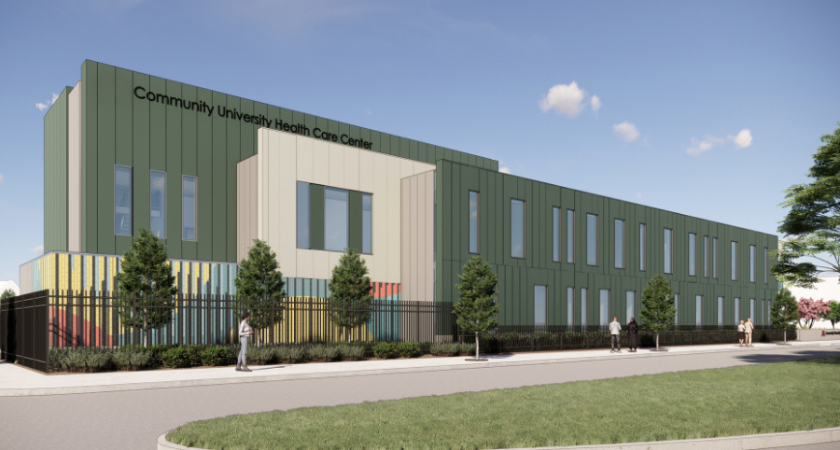
A $65 million expansion of the Community-University Health Care Center in Minneapolis is illustrating how academic and healthcare institutions are increasingly using construction projects to address not only patient care demand, but also workforce development and long-term community health needs.
The project, led by the University of Minnesota, will significantly expand one of the region’s long-standing community clinics, increasing capacity and adding new clinical services while maintaining its focus on underserved populations.
Designed by HGA and built by JE Dunn Construction, the facility represents a broader trend in institutional construction toward integrated healthcare environments that combine service delivery, education, and training functions within a single footprint.
The redevelopment will double the size of the existing clinic and introduce expanded services, including additional exam rooms, dental care capacity, pharmacy operations, physical therapy, and imaging services.
The facility is designed to support both increased patient volume and improved care coordination, with an estimated capacity to accommodate tens of thousands of additional patient visits over the next decade.
By consolidating services into a single expanded facility, the project reflects a shift in outpatient care design toward integrated, multi-specialty environments aimed at improving efficiency and patient experience.
A key challenge in the project is maintaining uninterrupted clinical operations during construction and transition phases. This requires phased planning strategies, careful sequencing, and coordination between construction teams and healthcare providers.
Projects of this type typically involve heightened attention to patient safety, accessibility, infection control, and continuity of care, making healthcare construction one of the more complex segments of institutional building work.
For contractors, these conditions require specialized expertise in occupied facility construction and long-duration phasing strategies.
Beyond clinical expansion, the facility plays a significant role in training future healthcare professionals, supporting residents and students across multiple disciplines including medicine, pharmacy, dentistry, public health, and social work.
This dual-purpose model—combining healthcare delivery with workforce development—has become increasingly common among universities and academic medical systems seeking to address long-term staffing shortages while expanding community services.
By embedding training functions within active care environments, institutions aim to create continuous pipelines of skilled professionals while enhancing service capacity.
The project is supported through a combination of university capital investment and a dedicated fundraising campaign, reflecting a growing reliance on blended funding models in public-interest healthcare construction.
This approach allows institutions to advance large-scale capital projects even in constrained budget environments, particularly when projects serve underserved or high-demand populations.
Such financing structures are increasingly being used across healthcare and academic sectors to support expansions that deliver both operational and social value.
.jpg)
For healthcare systems, universities, and institutional developers, the Minnesota project highlights a growing shift in how healthcare infrastructure is being planned and delivered.
Facilities are increasingly expected to serve multiple functions—clinical care, workforce training, and community support—within a single integrated environment.
For construction owners, this trend increases the importance of phased delivery expertise, healthcare-specific design coordination, and long-term operational planning. It also reinforces the value of flexible facility design that can adapt to changing care models and workforce needs over time.
As healthcare demand and staffing pressures continue to rise, institutional construction is likely to remain focused on multi-use facilities that address both service delivery and workforce pipeline challenges simultaneously.
Originally reported by Minnesota News & Events.