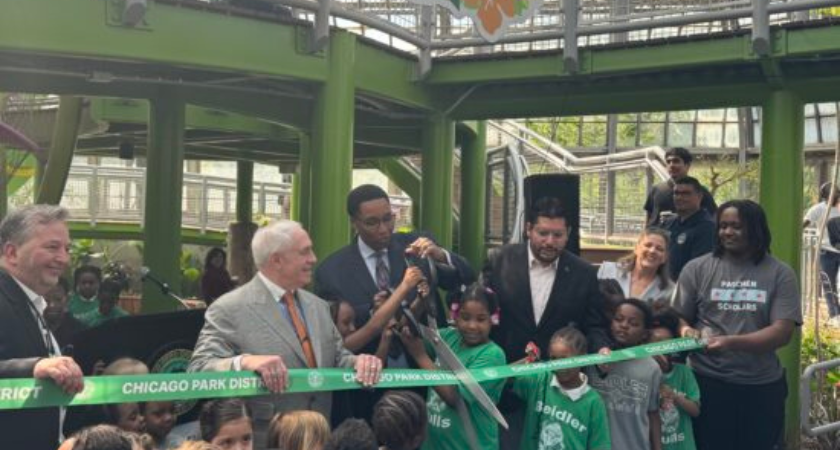
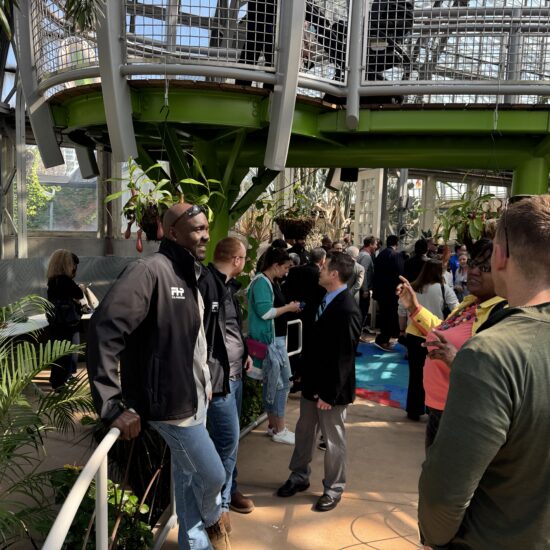
A major renovation at Chicago’s Garfield Park Conservatory is illustrating how public construction priorities are shifting toward adaptive reuse projects that combine preservation, accessibility, and community engagement.
The $9.2 million redevelopment of the Elizabeth Morse Genius Children’s Garden, led by F.H. Paschen, transformed an aging educational exhibit into a modern interactive space designed to expand learning and recreation opportunities within one of the country’s most significant historic greenhouse conservatories.
Unlike traditional facility upgrades, the project required construction within a sensitive, historic glass structure, demanding precision coordination between design intent and preservation requirements.
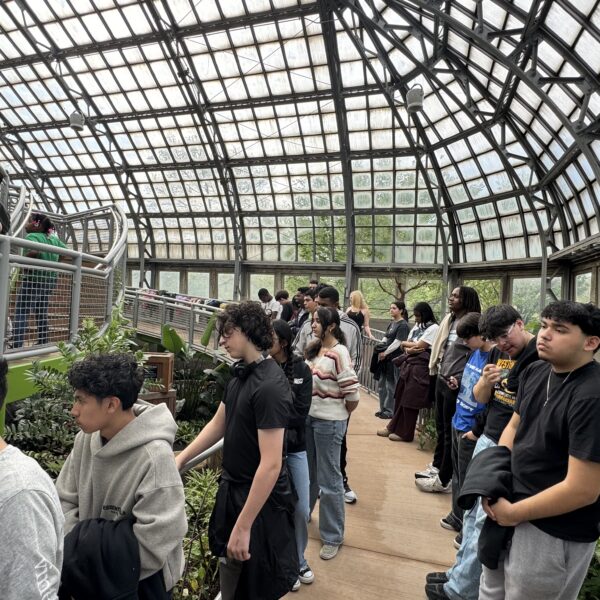
The renovation replaced a two-decade-old exhibit with a redesigned children’s environment focused on interactive learning, inclusive play, and improved accessibility.
Key additions included a wheelchair-accessible spiral ramp, upgraded structural systems, and new play features designed to accommodate a broader range of users and mobility needs.
Working within the conservatory’s protected architectural environment required careful staging and installation methods to avoid disruption to the existing structure while integrating modern building systems.
The project was financed through a combination of public and private funding sources, including municipal tax-increment financing, state grant support, Chicago Park District investment, and private philanthropic contributions.
This layered capital structure reflects a broader trend in civic infrastructure delivery, where municipalities increasingly rely on blended financing models to complete non-revenue-generating public projects amid budget constraints.
For public owners, this approach enables continued investment in cultural and recreational assets without relying exclusively on traditional capital budgets.
The Garfield Park project reflects a wider shift in urban development strategies toward renovating and repurposing existing civic assets rather than pursuing new construction.
For contractors, adaptive reuse projects in historic or culturally significant environments often require more specialized construction sequencing, careful material handling, and close collaboration with preservation and design teams.
These projects also tend to prioritize long-term community impact, accessibility, and educational value alongside physical infrastructure upgrades.
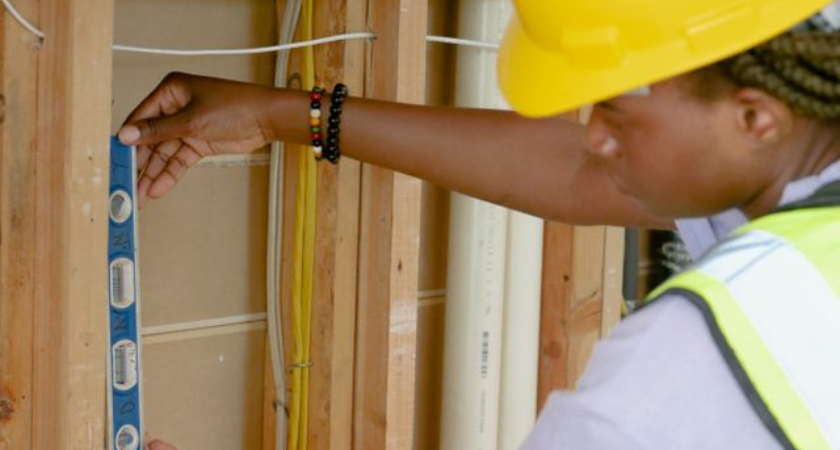
The project also included workforce development engagement through programs connected to construction education and mentorship, reinforcing a growing trend of linking public infrastructure projects with local talent pipelines.
Such initiatives are increasingly used to expose students and early-career workers to construction careers while integrating workforce development into project delivery frameworks.
For construction owners, municipalities, and institutional developers, the Garfield Park Conservatory renovation highlights the growing strategic value of civic renovation projects.
Owners are increasingly viewing public assets not only as facilities to maintain, but as platforms for community activation, education, and neighborhood revitalization. This shift is driving greater emphasis on accessibility, inclusivity, and lifecycle value in project planning.
As adaptive reuse becomes a more common delivery model, successful execution will depend on early planning coordination, preservation-sensitive construction methods, and financing strategies that combine public and private capital sources.
The broader takeaway: civic infrastructure is evolving from maintenance-driven work into long-term place-making strategy, where construction outcomes are measured as much by community impact as by physical delivery.
Originally reported by F.H. Paschen.