Harvard University is set to begin construction this spring on a new home for its Native American Program, marking a significant investment in academic and cultural infrastructure for Indigenous communities on campus.
.webp)
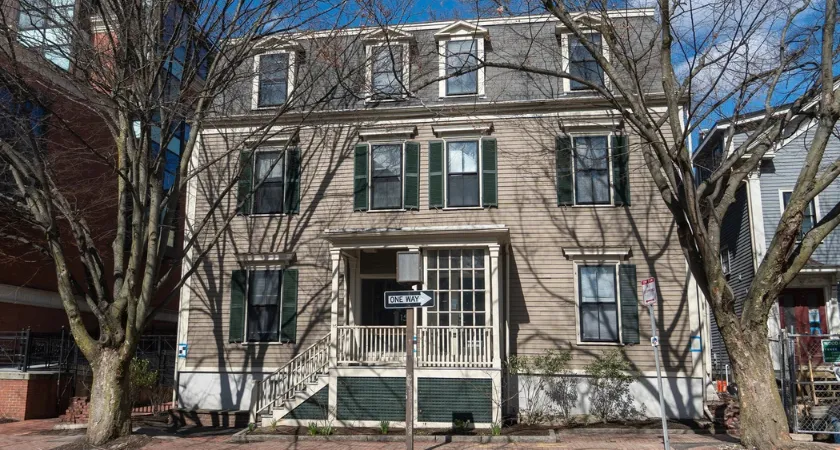
The Harvard University Native American Program (HUNAP) will relocate from its long-standing offices at 14 Story Street to a newly planned three-story, all-electric building at 15 Mount Auburn Street. According to a university spokesperson, the facility “will be fully operational” for the 2027–28 academic year.
The new building is envisioned as a central hub for Native American and Indigenous students, faculty, and affiliates, offering expanded space for academic programming, collaboration, and cultural engagement.
Spanning approximately 6,500 square feet, the building will include offices, lounges, kitchens, and a conference room, along with both indoor and outdoor gathering areas. The ground floor will feature a reception lounge, meeting spaces, and access to a covered front porch and rear deck, while upper levels will house additional workspaces and communal areas.
Outdoor spaces, including private side and backyard areas, are being designed specifically to accommodate ceremonies and cultural programming—reflecting the program’s emphasis on community and tradition.
HUNAP, which operates as a cross-school initiative, supports research, teaching, and engagement across disciplines such as Native American studies, history, and tribal relations. Its programming includes academic events, grants, and outreach efforts that connect Harvard with Indigenous communities.
The project follows Harvard’s 2023 acquisition of the property and a detailed feasibility assessment of the existing structure, an 1873 mansard-style building. Engineers determined the building was too deteriorated to renovate, citing structural weaknesses, water damage, and substandard ceiling heights.
The report concluded that renovation would “essentially require the construction of a new building within the shell of the existing building.”
As a result, Harvard opted for full demolition and reconstruction. The project has already secured key approvals, including from the Harvard Square Advisory Committee and the Cambridge Historical Commission, though it is still progressing through the city’s permitting process.
The building’s design incorporates Native materials and symbolism, with an exterior inspired by tree bark and wampum—traditional purple and white beads used in Indigenous cultural practices.
Site constraints have also influenced the project’s layout. A public walkway cuts through the property, and neighboring buildings sit in close proximity, requiring careful planning. Improvements to surrounding public spaces, including sidewalks, native plantings, and tree protections, are also part of the development.
The new facility comes as Harvard faces ongoing scrutiny over its efforts related to Indigenous reconciliation and repatriation. Expanding HUNAP’s physical presence is seen as one step toward strengthening institutional support for Native communities.
The all-electric design also aligns with Harvard’s broader sustainability goals, reflecting a shift toward lower-emission campus buildings.
.webp)
The development highlights a growing trend among universities to invest in dedicated cultural and academic spaces that support underrepresented communities. For Indigenous programs in particular, physical space can play a critical role in fostering identity, visibility, and collaboration.
By integrating ceremonial outdoor areas with academic facilities, the project blends cultural priorities with institutional infrastructure—something that has historically been lacking on many campuses.
The decision to demolish rather than renovate also reflects broader challenges in adapting aging urban buildings to modern standards. Structural limitations, accessibility requirements, and sustainability goals often make new construction more viable than retrofitting historic properties.
As the project moves forward, it may serve as a model for how universities approach culturally responsive design while addressing practical constraints such as site limitations and regulatory approvals.
Originally reported by Samuel S. Rudavsky, Crimson Staff Writer in The Crimson.