


A growing number of floating solar projects are reshaping energy infrastructure across the industrial Midwest, as cities and developers look for new ways to meet rising electricity demand driven by data centers, utility costs and broader energy market pressures.
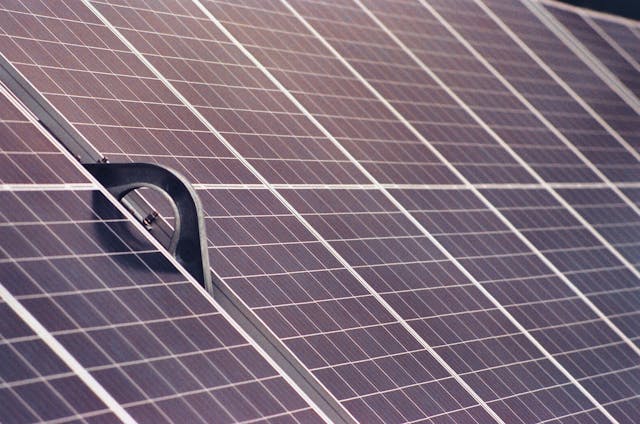
In Lima, a floating solar installation at Twin Lake Reservoir is emerging as a model for how municipalities can integrate renewable energy into existing infrastructure. Engineers and construction crews are installing more than 3,400 solar panels across roughly four acres of water, generating power for a nearby water treatment plant that operates around the clock.
“The water treatment plant is one of the city’s biggest energy costs; it only made sense to put the floating solar site here,” said Sara Weekley, deputy director of Lima’s utilities department. “It also helps keep water rates stable by lowering energy costs.”
The project reflects a broader transition in the Midwest from traditional manufacturing toward diversified energy solutions. Electricity demand has surged in recent years, driven in part by the expansion of data centers and rising utility rates tied to global energy market disruptions.
Developers are increasingly turning to floating solar technology to avoid competition for land, particularly in agricultural regions where farmland remains a critical economic resource. Florida-based D3Energy, which is leading the Lima project, has more than 25 installations underway and recently completed a larger project elsewhere in the region.
“Across most of the Midwest, and in Ohio in particular, agricultural land is a critical piece of the economy – you don’t want renewable energy and food production fighting each other for the same acres,” said Stetson Tchividjian. “Floating solar resolves that equation.”
Floating systems also offer efficiency advantages. According to developers, a one-megawatt floating solar installation typically requires about two acres of water, compared with roughly five acres for a ground-mounted system of similar capacity.
Beyond land efficiency, floating solar projects are delivering cost savings and environmental benefits. In Lima, the installation is expected to save approximately $10 million over its lifetime while reducing water evaporation and algae growth by limiting sunlight exposure.
“It keeps the water cooler; we’re not using any additional land,” Weekley said. “People like the idea that it’s not taking up any land and of us trying to save money.”
However, the rapid expansion of solar energy is not without challenges. Some rural communities have raised concerns about large-scale solar developments, particularly when they compete with agricultural land or alter local landscapes. Extreme weather risks have also drawn attention, following storm damage to a major solar installation in neighboring Indiana.
At the same time, rising energy costs and shifting global dynamics — including geopolitical tensions affecting fuel prices — are accelerating interest in domestic energy production. Industry leaders say renewable energy, including floating solar, plays a key role in strengthening energy independence.
.jpg)
“What it’s done is remind people why energy independence matters,” Tchividjian said. “Domestic generation that isn’t exposed to a single geopolitical event is more valuable, not less, in this kind of environment. Solar is a key cog in that wheel.”
The Midwest’s solar expansion is also supported by manufacturing growth. Companies like First Solar have invested heavily in production and research facilities in the region, helping to advance next-generation solar technologies.
As demand for electricity continues to climb, particularly from energy-intensive sectors like data centers, floating solar projects are expected to play an increasingly important role in balancing land use, cost efficiency and sustainability across the region.
Originally reported by The Guardian.
.png)


.png)


