Elon Musk says Tesla, Inc. and SpaceX are working toward building what could become the world’s largest chip manufacturing facility, a project he described as unprecedented in both scale and ambition.
.webp)
The proposed facility — part of a broader initiative known as “Terafab” — is expected to focus on producing semiconductors for artificial intelligence systems and space-based data infrastructure. Musk indicated the plant could dwarf existing chipmaking facilities, potentially reaching a scale more than 12 times larger than current industry benchmarks.
Tesla has already promoted the concept, stating it would be the “the largest chip manufacturing facility ever.” The plant is expected to support massive computing capacity, supplying chips for both terrestrial AI systems and space-based data operations.
“We’re confident this is feasible. No new physics or impossible things are required to get there,” Musk said during a presentation Saturday. “We’re starting off with an advanced technology fab here in Austin.”
Musk outlined the enormous infrastructure requirements tied to the project, noting that the full-scale development would require thousands of acres and more than 10 gigawatts of power. The facility is also expected to produce up to 160,000 semiconductor wafers per month, supporting Tesla’s electric vehicles, Optimus robots, and broader AI ecosystem.
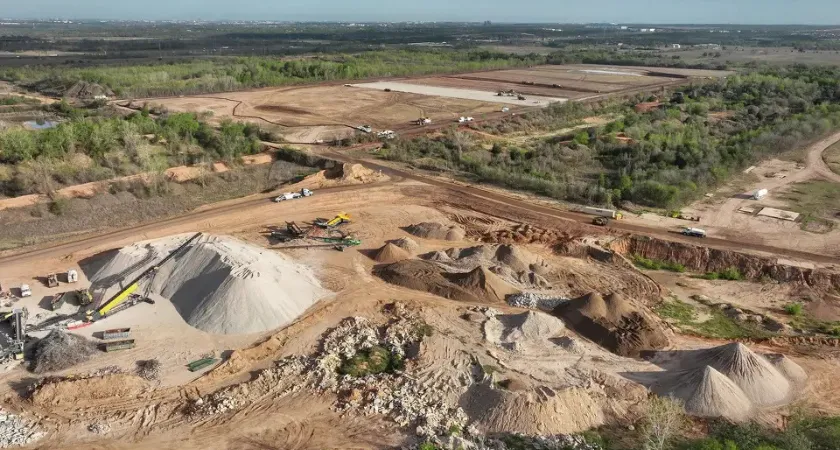
Despite the bold vision, the project remains in early stages. No official timeline has been announced, and multiple sites are still under evaluation. While construction activity has begun near Tesla’s Texas operations, Musk clarified that the current work is tied to a smaller chip design facility rather than the full Terafab buildout.
“We couldn’t possibly fit the Terafab on the GigaTexas campus,” Musk wrote later. “It will be far bigger than everything else combined there.” One hundred million square feet is the “right order of magnitude,” he added.
The scale of Musk’s proposal would far exceed projects like the semiconductor facility being developed by Samsung Electronics in Taylor, Texas, which is expected to span about 8 million square feet by 2028. If realized, Terafab would mark a dramatic leap in chip manufacturing capacity in the United States.
Texas leaders have welcomed the vision, seeing it as a continuation of the state’s emergence as a hub for advanced manufacturing, semiconductors, and artificial intelligence. The project also aligns with broader industry trends, as companies seek to localize chip production following global shortages and supply chain disruptions.
At the same time, Musk acknowledged the limitations of relying solely on existing suppliers, even while expressing support for their expansion.
“We would like them to expand as quickly as they can and we will buy all of their chips,” he said.
“But,” he continued, “there’s a ‘maximum rate at which they’re comfortable expanding.’”
“That rate is much less than we would like,” Musk said. “And so, we either build the Terafab or we don’t have the chips.”
Originally reported by Andrea Guzmán,Staff Writer in States Man.