A sweeping new directive from Donald Trump is set to reshape how federal contractors operate, introducing stricter requirements around diversity, equity and inclusion (DEI) practices across government-funded projects.
.webp)
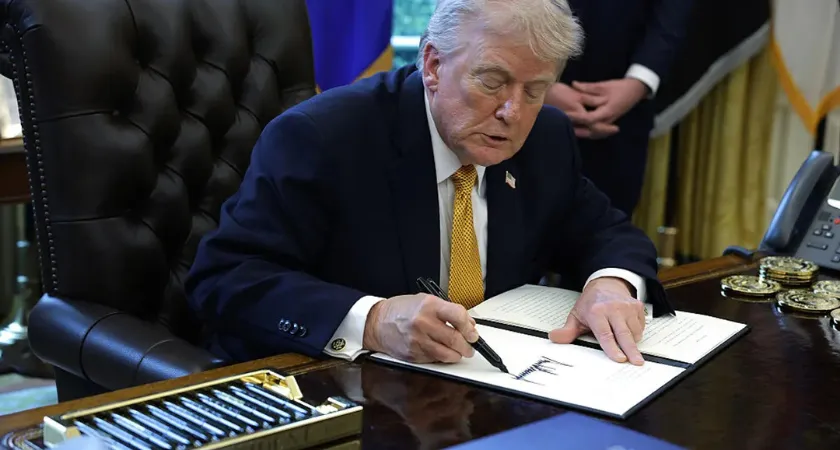
Under the executive order issued in late March 2026, all federal departments and agencies must include a clause in contracts and subcontracts requiring companies to certify that they will “not engage in any racially discriminatory DEI activities.” Failure to comply could result in termination of contracts, raising significant concerns across the construction and broader federal contracting landscape.
The order establishes firm deadlines for implementation. Federal agencies have until April 25 to incorporate the clause into contracts, while agency leaders must complete compliance reviews by July 24.
Beyond contractual language, the directive also calls on key federal leaders — including the chair of the U.S. Equal Employment Opportunity Commission — to identify industries at higher risk of engaging in what the administration defines as discriminatory DEI practices. These findings will help shape further enforcement and oversight measures.
The administration argues that certain DEI programs may distort hiring and procurement decisions. In the order, Trump stated that DEI efforts can “create unnecessary costs by reducing the pool of available labor by artificially limiting companies to hiring or promoting certain individuals, suppliers, or intermediaries based on their race or ethnicity.”
The order continues: “These costs are inevitably passed on to the Federal Government when it contracts with companies who engage in racially discriminatory DEI activities, or who use subcontractors who do so.”
The directive goes beyond policy guidance by introducing potential legal consequences. Contractors may be required to provide “all information and reports,” including “books, records, and accounts,” for federal review.
Additionally, the order instructs the attorney general, in coordination with contracting agencies, to evaluate whether companies violating the clause could face action under the False Claims Act — a move that could expose firms to significant financial penalties and legal scrutiny.
This escalation signals a more aggressive enforcement posture compared to earlier actions targeting DEI initiatives.
This latest directive builds on a series of executive actions introduced since early 2025. Shortly after taking office, Trump rescinded prior diversity-focused mandates introduced under Joe Biden, including requirements for agency equity teams and DEI-related hiring considerations.
Subsequent orders expanded the rollback, directing federal agencies and contractors to eliminate DEI programs “under whatever name they appear.” While these policies have faced legal challenges, courts have largely allowed them to proceed. Notably, the U.S. Court of Appeals for the Fourth Circuit overturned a lower court injunction, enabling enforcement of key provisions.
At the same time, federal agencies have intensified scrutiny. The EEOC, now fully staffed, has indicated plans to more aggressively investigate DEI-related discrimination claims. In a February communication, agency leadership warned major corporations about potential legal exposure tied to diversity initiatives.
The construction sector — one of the largest recipients of federal contracts — is expected to feel immediate effects. Contractors working on infrastructure, transportation and public works projects will need to reassess internal policies, subcontractor relationships and compliance frameworks.
Legal experts note that ambiguity around what constitutes “racially discriminatory DEI activities” could create uncertainty, particularly for firms with existing diversity programs or supplier diversity commitments.
Recent industry surveys reflect this shift. Employers now rank DEI-related regulation as the top factor influencing workplace policy changes, surpassing even emerging technologies like artificial intelligence.
.webp)
For contractors, the stakes are high: adapt quickly to evolving federal requirements or risk losing access to lucrative government work.
The order could have ripple effects beyond compliance. Contractors may need to:
In the long term, this policy shift may reshape how companies approach workforce development, supplier engagement and corporate governance within federally funded construction.
At the same time, ongoing legal challenges and potential political shifts could influence how aggressively the order is enforced or modified in the future — leaving contractors navigating a rapidly evolving regulatory environment.
Originally reported by Emilie Shumway, Editor in Construction Dive.